Monday, 9 November 2015

"Bullet shatters Gowhar’s dream to help his father"

A narrow lane leading to the residence of Gowhar Nazir Dar—who was killed when Central Reserve Police Force men fired at protesters yesterday—looks like an alley enveloped in thick fog. The smoke emanating from teargas shells, lobbed by police and paramilitary forces on mourners, is giving tough time to people walking in the street at Mustafabad in HMT area on Srinagar outskirts.

All mourners visiting the bereaved family cough or sneeze as they enter Gowhar’s residence. Some of the teargas shells have landed inside the tent where women are mourning the youth’s death.

Gowhar, 22, was killed when Central Reserve Police Force men fired at protesters at Zainakote HMT on Saturday—the day Prime Minister Narendra Modi was in Srinagar.

“They (cops) snatched everything from us and yet they are not satisfied. They have no mercy on mourners. Look how ruthless they are,” said an elderly person, sitting outside the house of slain Gowhar, as he points towards police and paramilitary forces firing teargas shells from the entrance of the lane.

Sitting in a corner of the tent, Gowhar’s mother Shameema is dumbstruck. She is not able to utter a word. She falls unconscious as she begins to cry. “They snatched my world,” she said, and instantly fell unconscious.

As women around try to console her, Gowhar’s two younger sisters start crying aloud, making everyone inside the tent weep. 

Gowhar, according to his relatives, had a dream to help his father who runs a small workshop at HMT. “Gowhar recently told his father that he wanted to go outside J&K for a job. He wanted to help his father,” said Inayatullah Dar, the slain youth’s cousin. He said Gowhar yesterday went to buy milk on a scooty. “On his return, he saw a man lying on road. He stopped his scooty to see what had happened and within no time, he was shot in his head,” he said. “It wasn’t a teargas shell, but a bullet fired by CRPF men.”

Many youth, who had assembled at Gowhar’s residence, said when the tragedy occurred, there was no stone pelting going on in the area that time. “Things had settled down. The CRPF men, however, went berserk and started beating up people ruthlessly,” they said. 

Gowhar, according to locals, was a very gentle boy. “He was fond of going to gym and would often ask us to accompany him,” his friends told Greater Kashmir. “He was very intelligent. Sometimes he would say he wanted to take his entire family outside J&K for a tour.”

Gowhar, they said, was fond of wearing good clothes. “We used to call him GD. He has also a Facebook account by the name of GD Gowhar,” one of his friends said. 

Gowhar’s father Nazir Ahmed Dar is in a shock. He is lost in the memories of his son. Dar, his relatives said, had recently paid Rs 30000 as last semester fee to his son who studied at Sir Syed Memorial College (SSM).

A teacher at the SSM said Gowhar was a student of Computer Science department. “He was a very bright and talented student. He would give a lot of respect to his teachers,” he said. “We lost a very intelligent student. He would always be attentive during his classes and often go deeper into things.”

On his Facebook wall, he has mentioned his date of birth as February 8, 1993. He had updated his FB page on August 9 by posting the date of death anniversary of Fida Nabi, a youth from his area who was killed during the summer agitation of 2010.

Previously published on GreaterKashmir on 8th Nov 2015 

http://www.greaterkashmir.com/news/kashmir/-bullet-shatters-gowhar-s-dream-to-help-his-father/201101.html 

Monday, 14 September 2015

Photo Essay: Kashmir’s Story Of Violations And Injustice


Kashmir’s Story Of Violations And Injustice


By ZACHARIE RABEHI 


SRINAGAR: Kashmiris have been agitating for the withdrawal of the Armed Forces Special Powers Act, as a draconian law that gives the Army the impunity to cross the barrier of laws and conventions into violations of human rights. The Army has been clear, as have been successive governments in New Delhi, that it will not agree to ‘cleanse’ Jammu and Kashmir of terrorism until and unless the soldiers are ‘protected’ by AFSPA. 

In the midst of this debate weighed heavily on the side of the Indian Army, the Kashmiris have suffered. This has been acknowledged by fact finding reports, by political leaders and chief ministers of Jammu and Kashmir, by at least 14 political parties in different parts of India that have now officially demanded the revocation of AFSPA but to no avail. 

Well known French photographer ZACHARIE RABEHI who has recorded his travels across the world with amazing photographs, has captured the human rights violations in the Valley with these photographs and testimonies from the victims. The Citizen, as part of its commitment to the truth as it is brings you this amazing photo essay: 
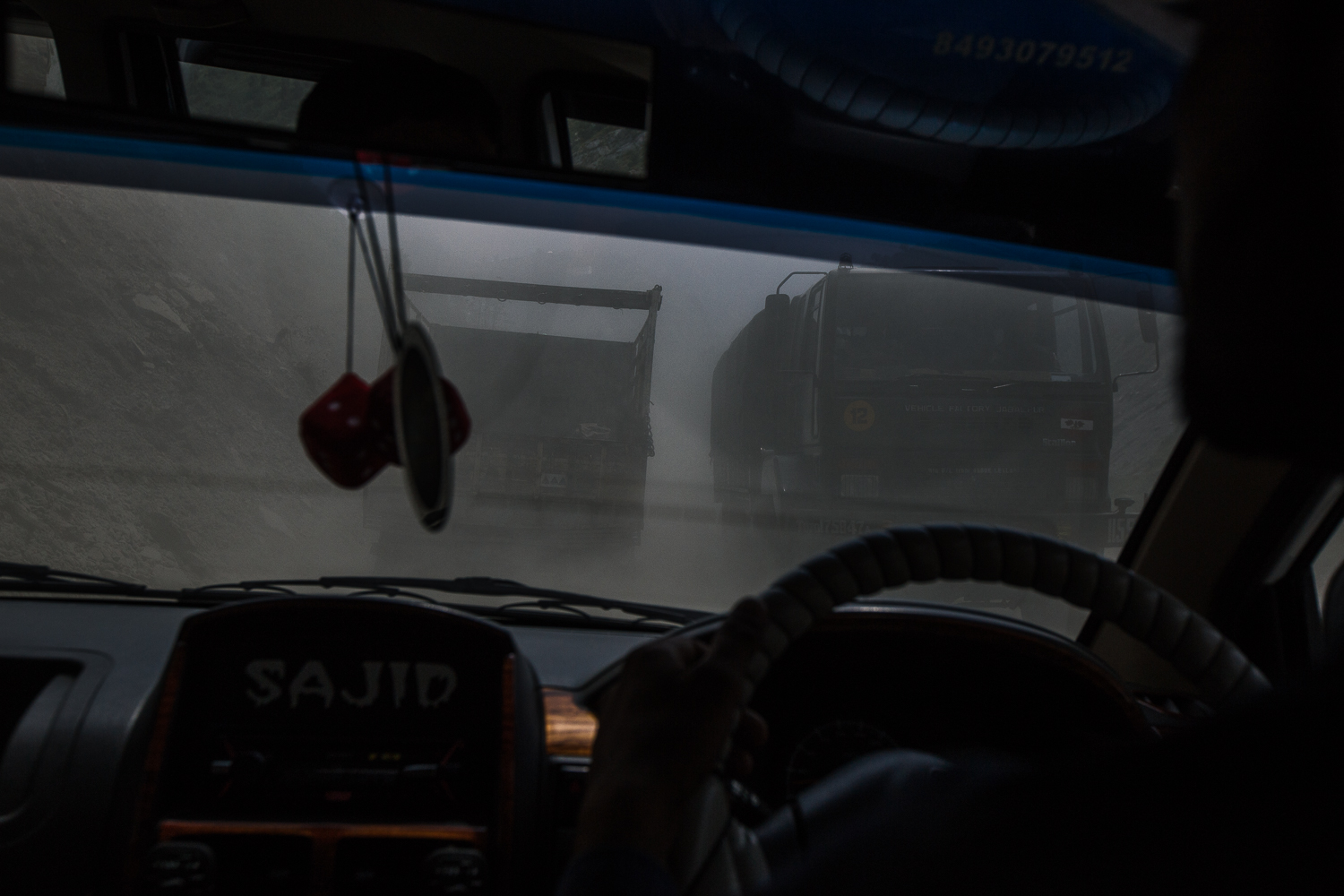
(Military trucks on the highway between Jammu and Kashmir).

According to the South Asian Terrorism portal, over 50,000 people have died in the conflict in Kashmir since 1988. Unofficial figures place the casualties at multiples of the above number. Further, the impunity of the security apparatus has contributed to the enforced and involuntary disappearance of over 8000 persons and the disclosure of over 6000 unknown and unmarked mass graves. The figures, in all probability a major underestimation, reflect on the scale of the vast human rights tragedy that has plagued Kashmir. 
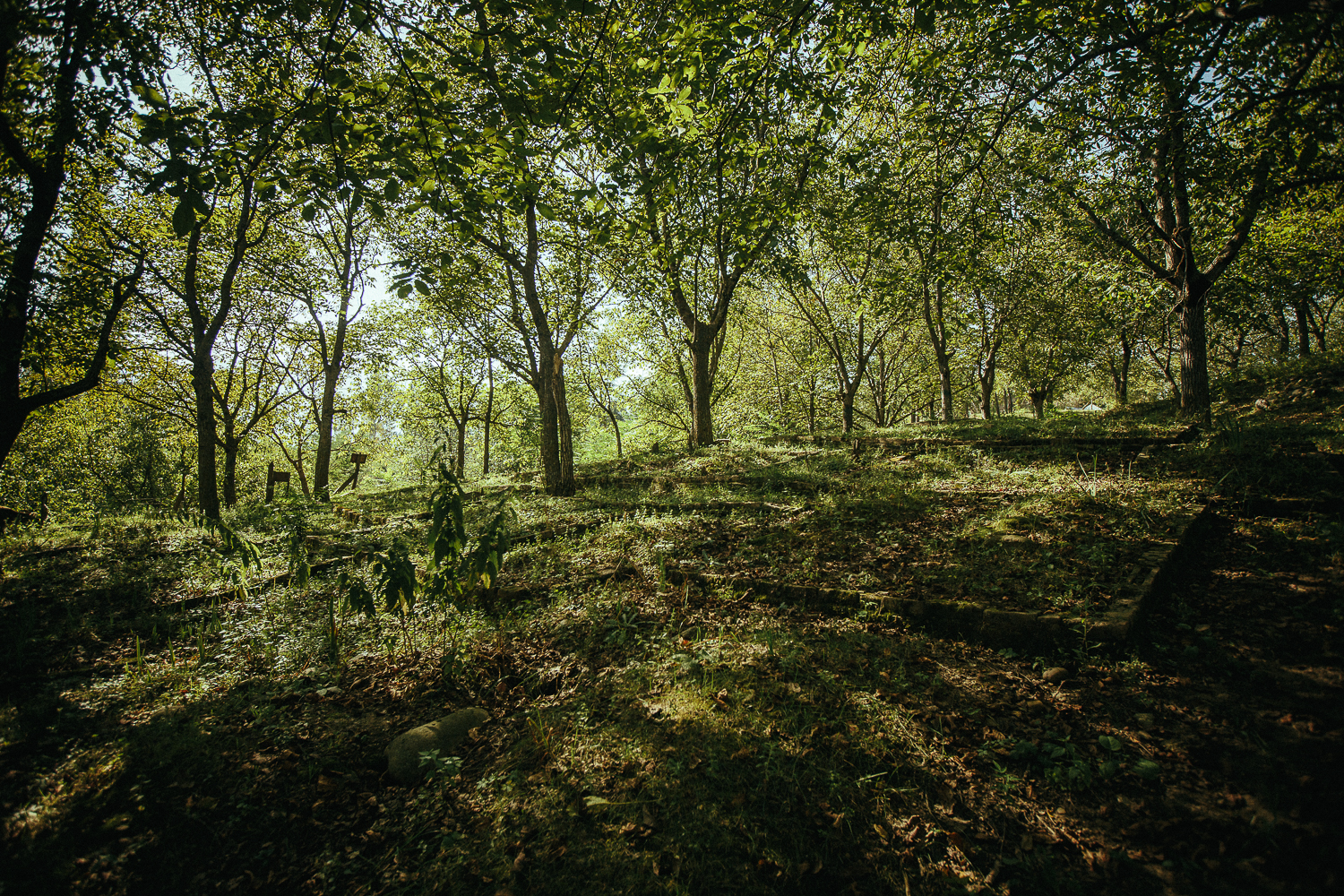
(Mass grave, Baramulla District).

The official account, related by the Indian and Jammu and Kashmir administration and security apparatus, states that the dead buried in the unmarked graves are unequivocally “foreign militants/terrorists.” The perception in Kashmir is different. Hundreds and thousands of people have lost a loved one -- a brother, a son, a father, a husband, with the latter leading to the prevalence of “half widows,” women whose husbands are missing but not confirmed dead. 

Human rights organisations have repeatedly criticised the culture of forced disappearances in Kashmir, maintaining that a majority of those killed were targeted in “fake encounters” -- a term used to refer to the police or armed forces killing suspects when they are either in custody or are unarmed, and then claiming to have shot them in self-defence. 

Stories of disappearances, encounters, death and violence characterises every day life in Kashmir. Here are some personal accounts from Kashmir. 
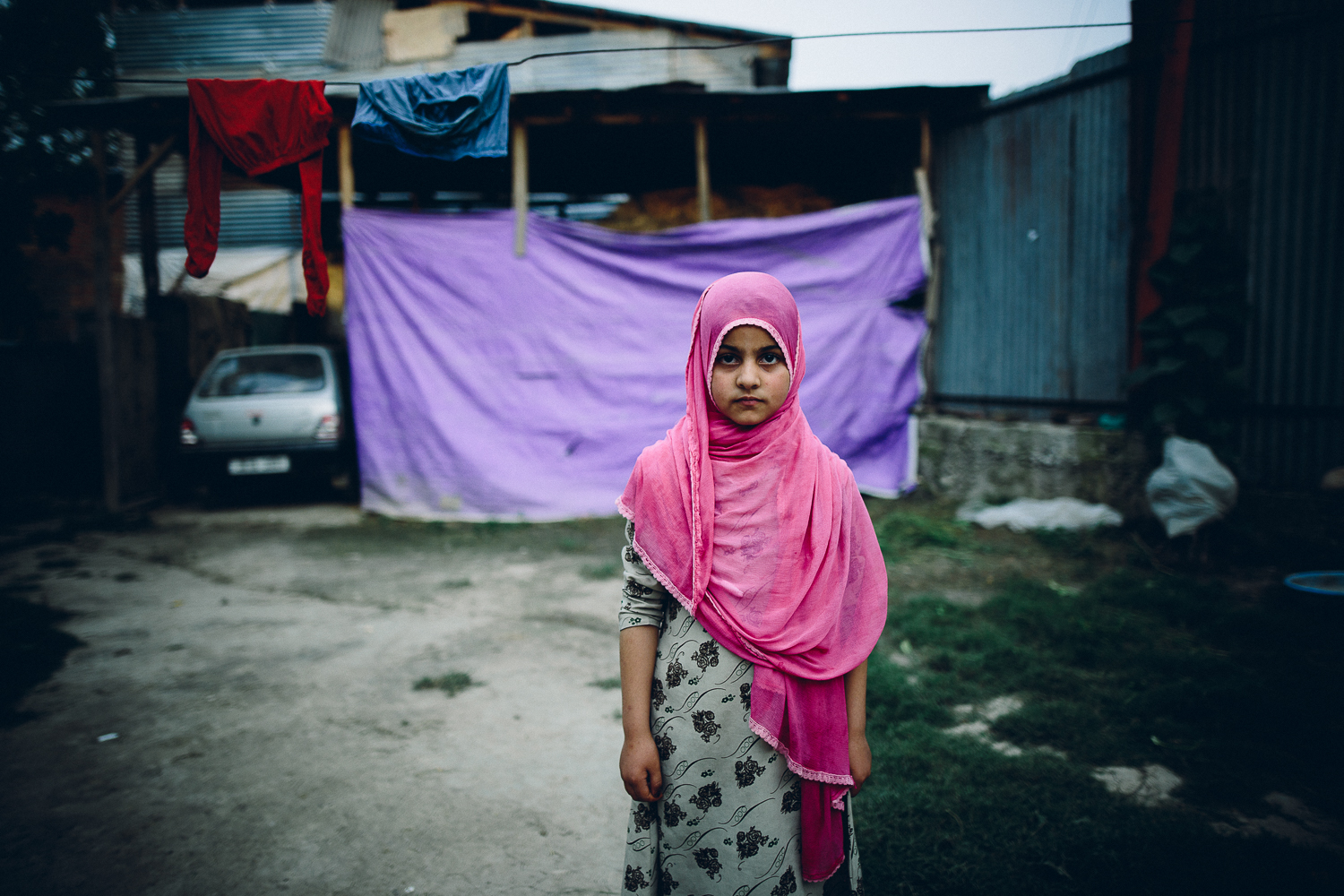
Name withheld on request, Pattan. 

“My brother Adil was 13yrs old. He had gone to the neighbouring village to see a pro-freedom demonstration when Indian forces opened fire to break the peaceful protest. Later my mother received a phone call from the hospital informing her that he was wounded. A few moment later we received another phone call, this time to tell us that he had been killed. The doctors said that my brother was dragged from the bed and shot twice in the neck and back by the military inside the hospital.” 
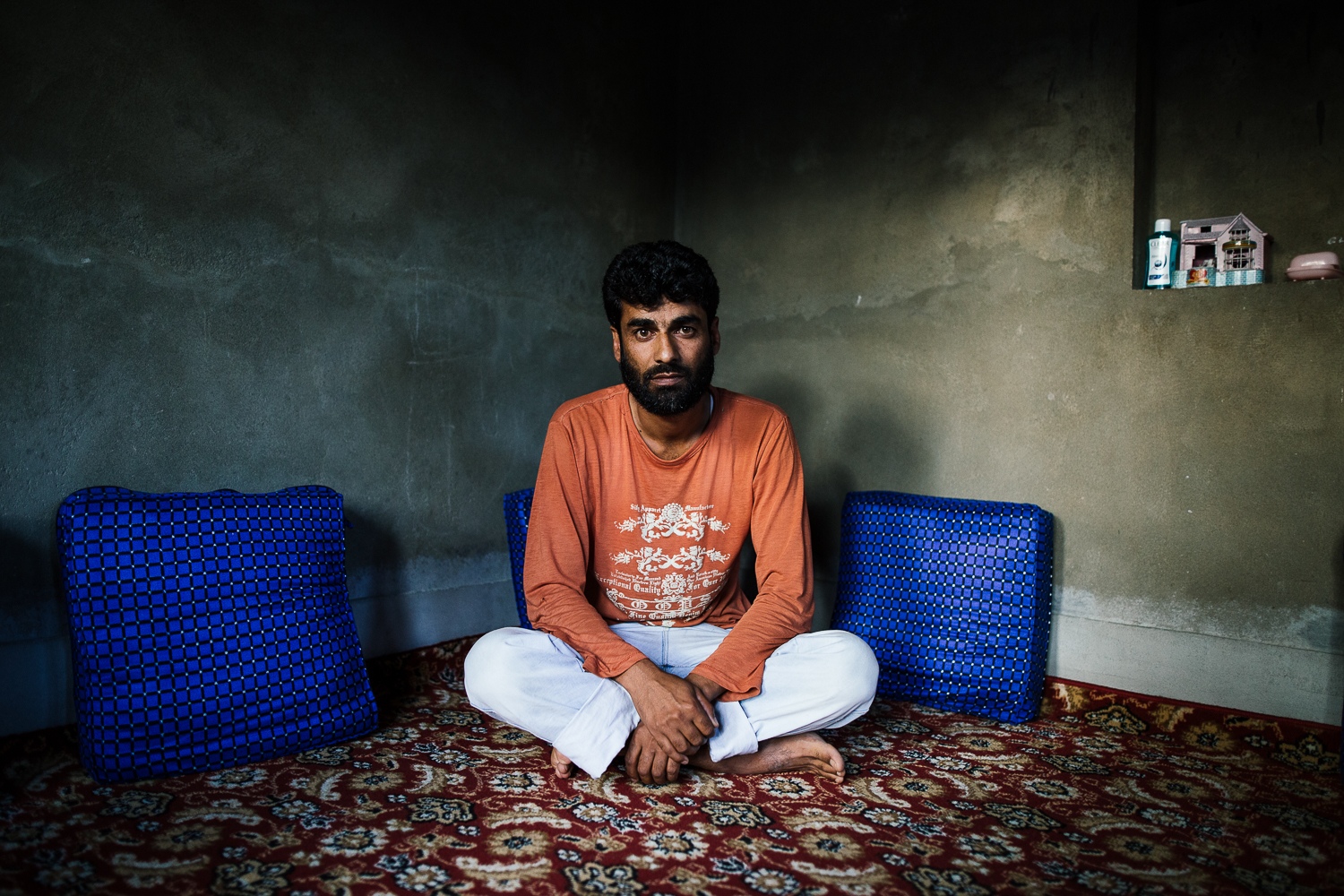

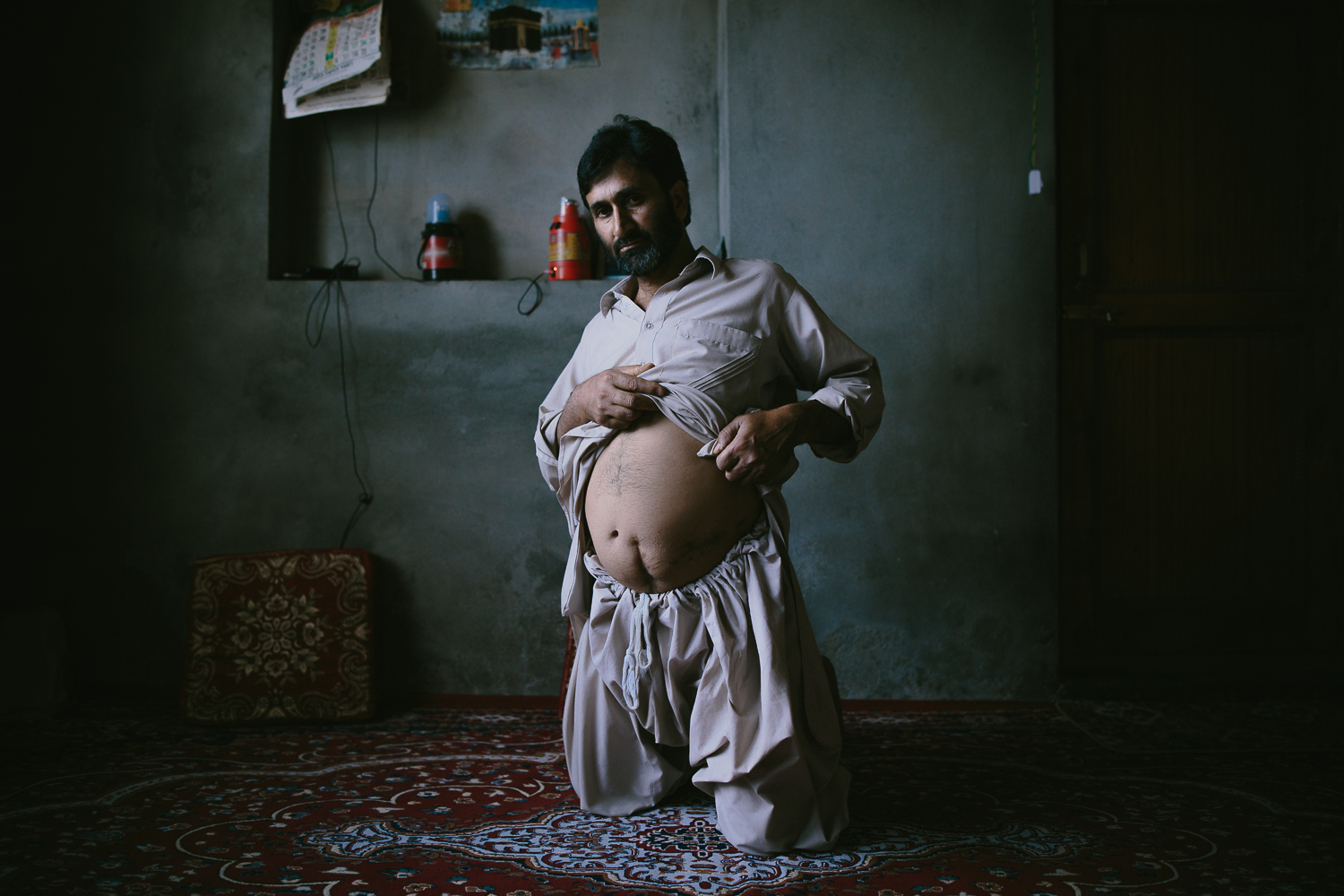
Traik Ahmed Ganaia, 42 years old, Palhalan 

“Early one morning 2 armed men entered my house. They asked for food and sat there all day. They were militants. In the darkness of the evening they left. My family was stressed. The next morning in the first light, someone knocked on the door. My elder brother answered the knock; was the army and police. They asked us where were the militants. We told them what had happened and gave their description. They took me and my brother to the interrogation centre. There they put me naked in front of my brother and beat me with bamboo sticks on the legs. My brother begged the police officer to not beat me on the head because I was suffering from neurological problems. That's when they started to beat me on the ears, clapping their hands like a musical instrument. I was unconscious after an hour. The next day I woke up in the police hospital. I had head pain. Both my ears were swollen and my legs double their size. I was put under observation and suffered from internal bleeding. Since then I cannot hear anymore from my left ear.” 
Mansoor Ahmed Naikoo, 55 years old, Pattan. 

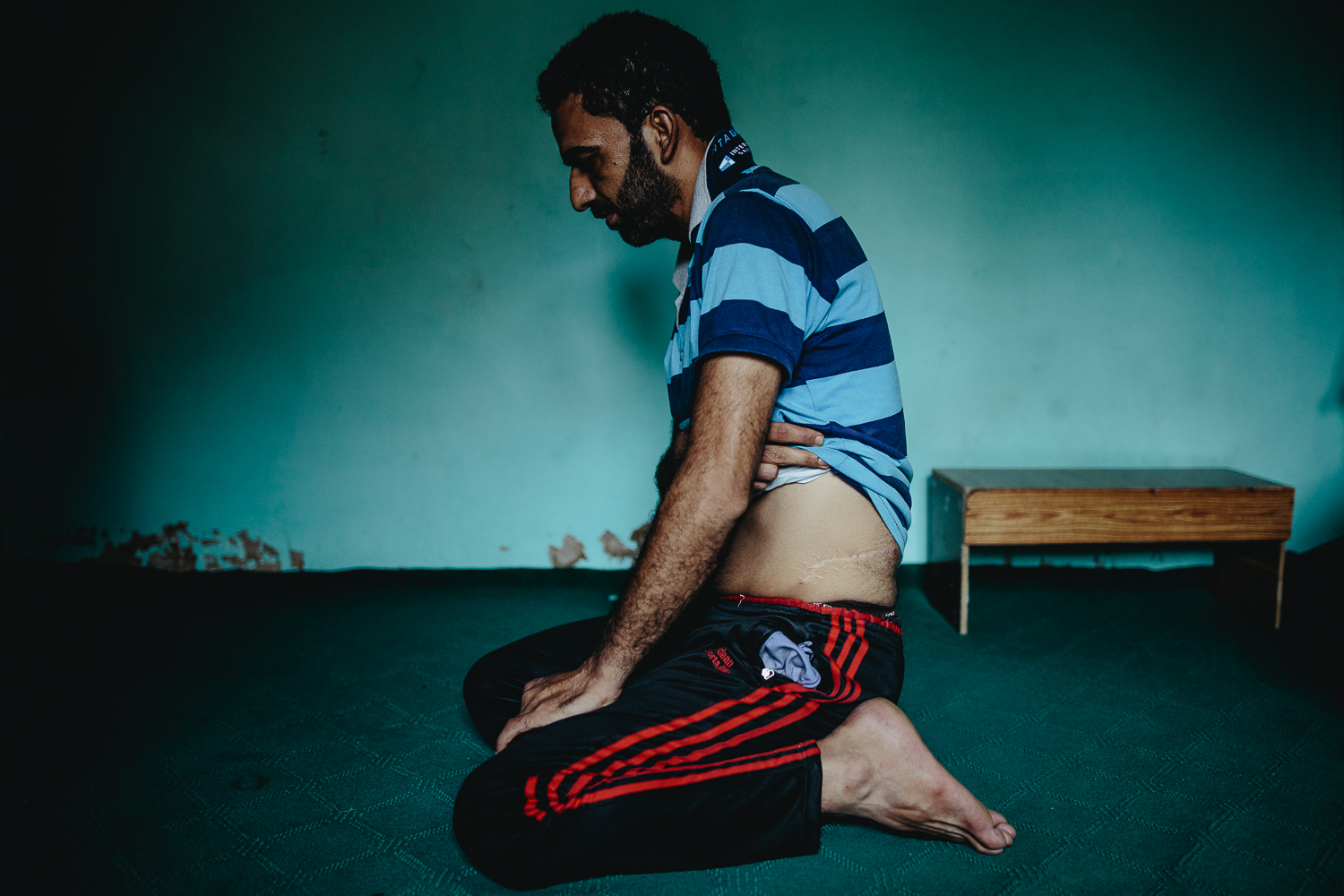
“One day in 1990, the army came and asked all the men of the village to gather at the school. One major of the army asked me my name and brought me to a room where four soldiers were waiting. They removed my clothes, they tied my arms with ropes. They then tied a cloth on my penis and set fire to it. They then inserted a wooden rod in my anus. For an hour they repeatedly asked me ‘where were the weapons?’ People outside the room started to protest at the school against my detention. That is when they took me to my own house to repeat the same treatment. They forced me to drink around 5 litres of dirty water while sodomising me with the rod. They questioned me again and I repeated that I was a shopkeeper and that I had never held a weapon in my life. They took me to the next house and used an electricity wire to shock me all over my body. When we left the first house I saw that a young-man that they were questioning had died there. After throwing me on the floor one soldier stepped on my neck with his shoe and asked me to show him where the weapons were or he will suffocate me. 

I could not breath or talk anymore and signalled to him with my foot. He released my neck so I could speak and repeat that I had nothing to do with the militants. One soldier took his helmet and started beating me with it on the chest. Another soldier asked him to stop the interrogation because I was nearly dying. One officer came to the room, they told him that they didn't find anything so they took me back to the school. The beating and torture lasted around 9 hours. At the school they were at least ten boys in handcuffs. As I couldn't stand anymore, the soldiers left me lying there on the floor. A few young guys helped me back home. There was a curfew that night so I couldn't get any medical treatment. My rectum was bleeding all night. In the morning my relatives came to my house and took me to the hospital. The soldiers tried to stop us but my neighbours and relatives protested and I finally could make it to a hospital in Srinagar. They kept me 40 days under treatment. I underwent major surgeries because my colon was ripped. After one month of being released from hospital, the infection came back. They operated on me again to remove a part of my colon. For 22 years my stool came out of a hole in my stomach.” 

Nayeen Muhammed, 29 years old, Pattan. 

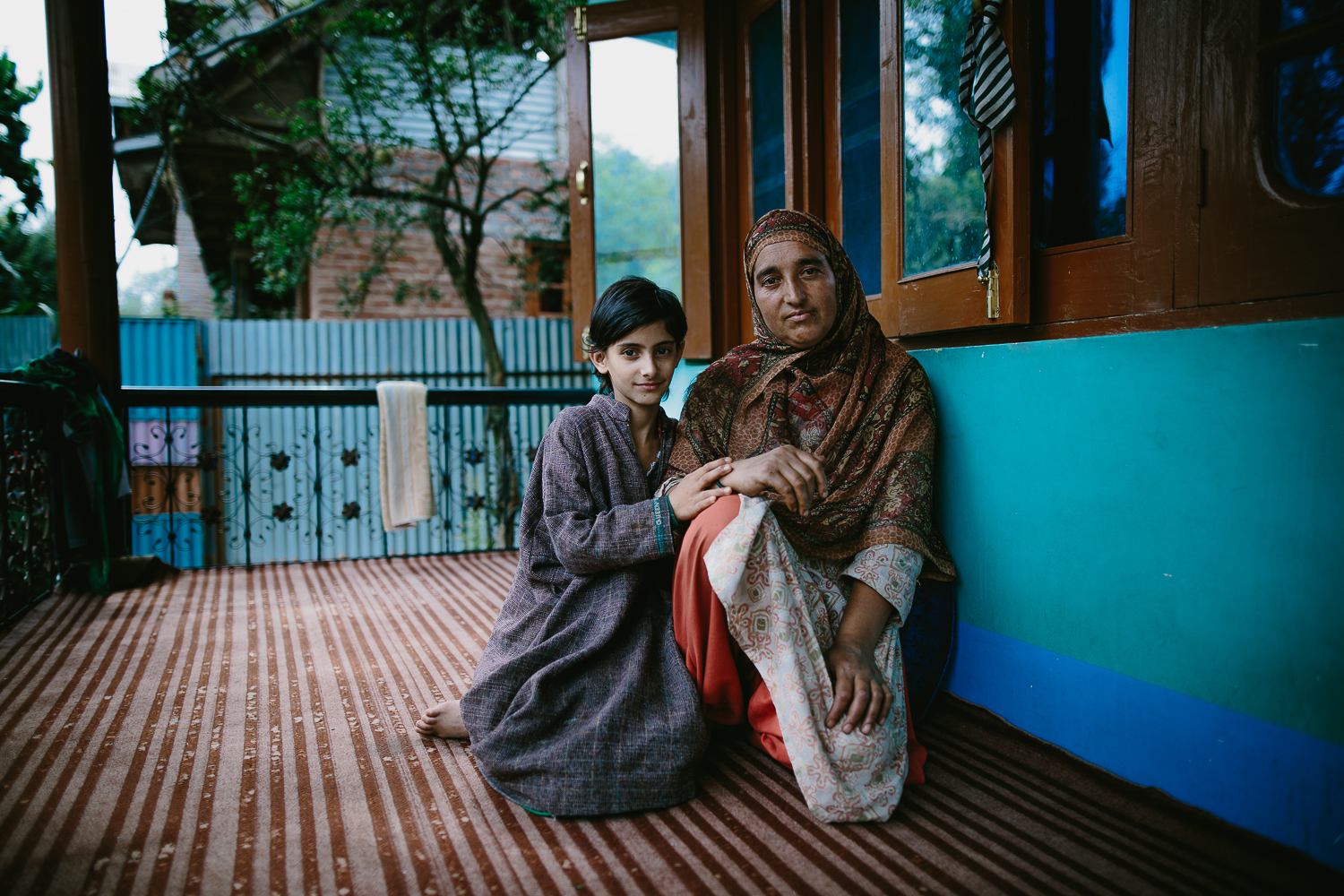
“Before the celebration of Eid, I stepped out of the house to buy groceries. That is when an army patrol saw me. I felt a burn in my back and fell on the floor. I was shot. Then the patrol rushed to me and started beating me while I was lying on the floor. When they thought I was dead they left me there. Two weeks passed. I was still recovering when my brother was shot by the military while stepping out of the mosque after prayers.” 
Mumtaza, Pattan. 

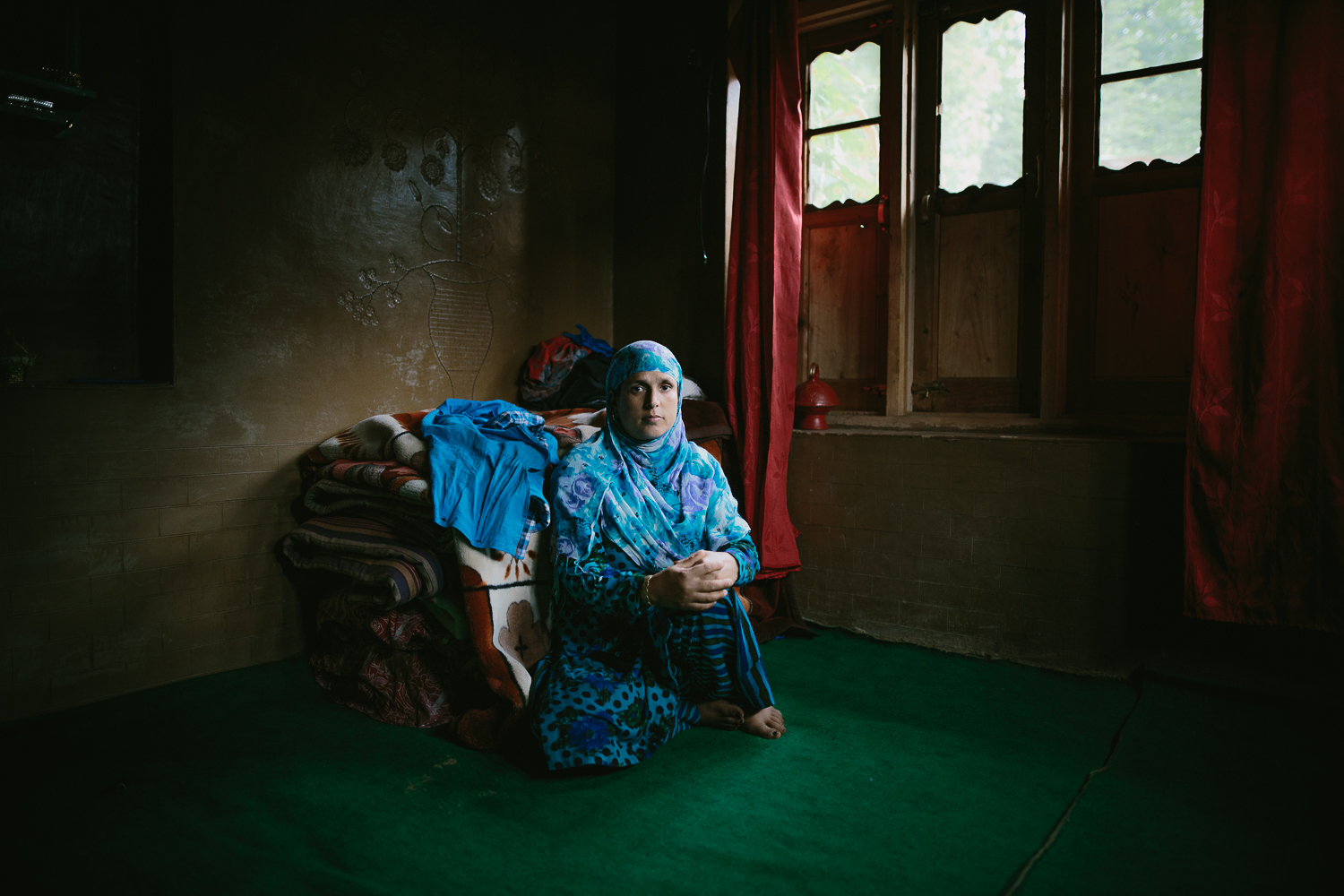
“The Indian army along with the local police stormed my house at around 1 am in 2010. They said they were looking for armed militants but they shot and killed 5 members of my family and shot me 11 times with AK47s. Once they left, I had to walk 200 meters to seek help from my neighbours. My arms and upper body are cribbed will shot wound scars.” 
Fatima Ashraf, Pattan. 

“My children were playing outside of our house when an Indian army patrol entered the street and started shooting randomly. My husband rushed outside to protect the children. He was shot four times. I found him lying in his blood right outside our door.” 
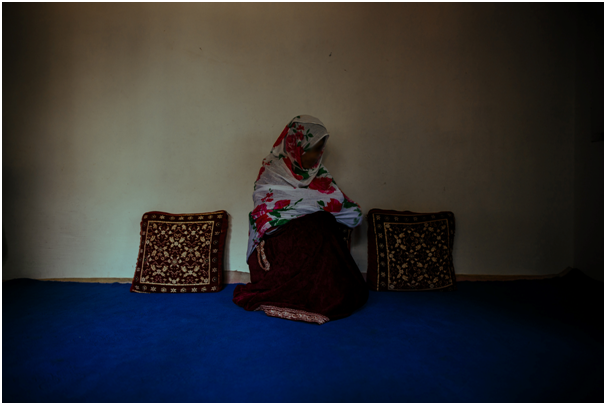
 

Unnamed woman in Poshpora

“One night during the winter of 1991, the army came to our village. They asked all the men to come outside of the houses. We could see military all over the place. They took all the men into different spots of the village and tortured them. A group of soldiers came inside my house and raped me in front of my children. When they were done I was in a very bad condition but they installed a curfew that lasted four days where we couldn't leave our houses. Finally after seeking medical help, because of an infection, they removed my ovaries. Today I take antidepressant pills which cause me stomach aches.” 
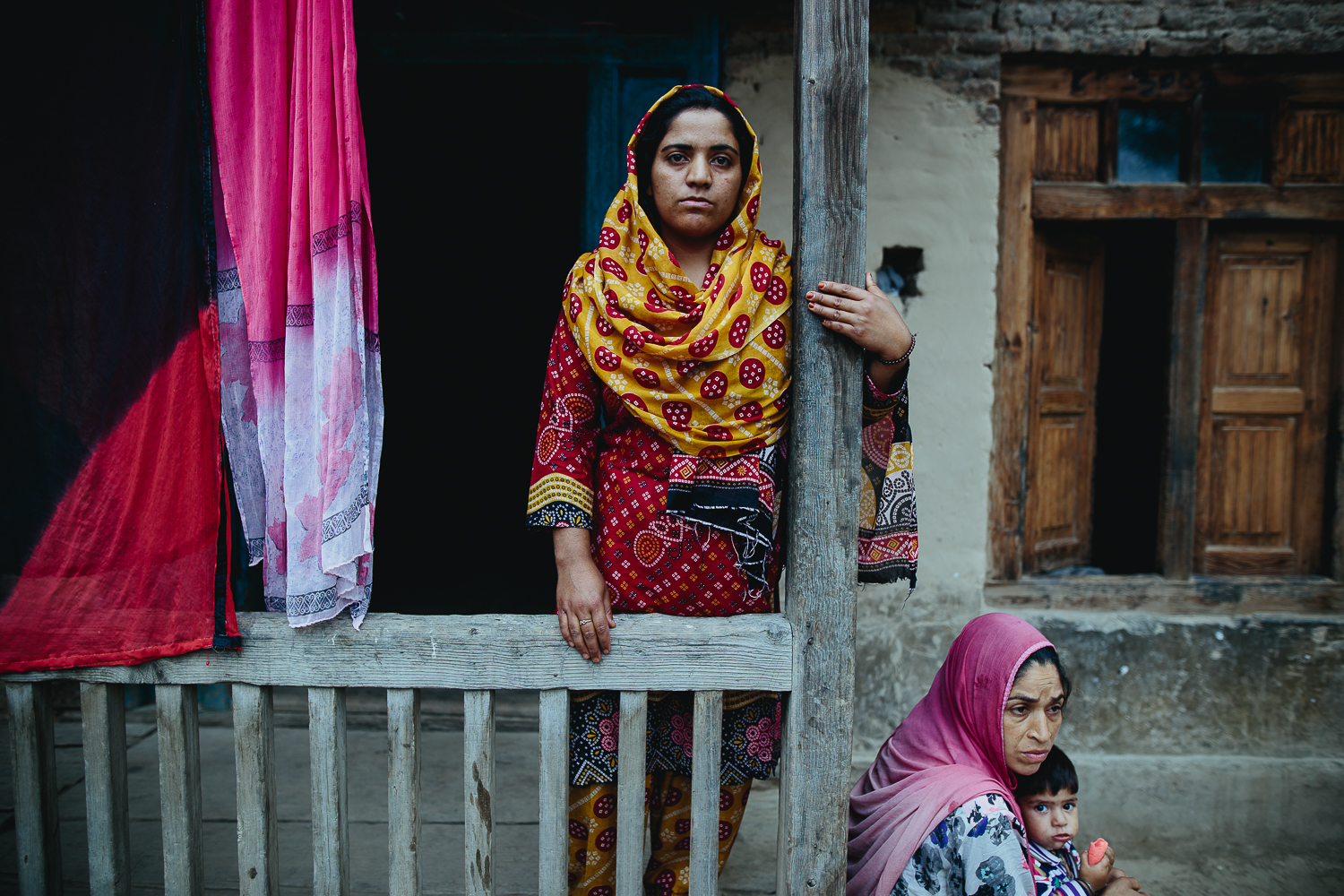
Munirka, Pattan. 

“I was 21 years old when my brother was shot by the Indian army in front of our house. He was simply going out to shop for food. I found him lying on the floor crying for help only a meter away from our door. He died 10 minutes later. No justice or explanation has been given to us.” 
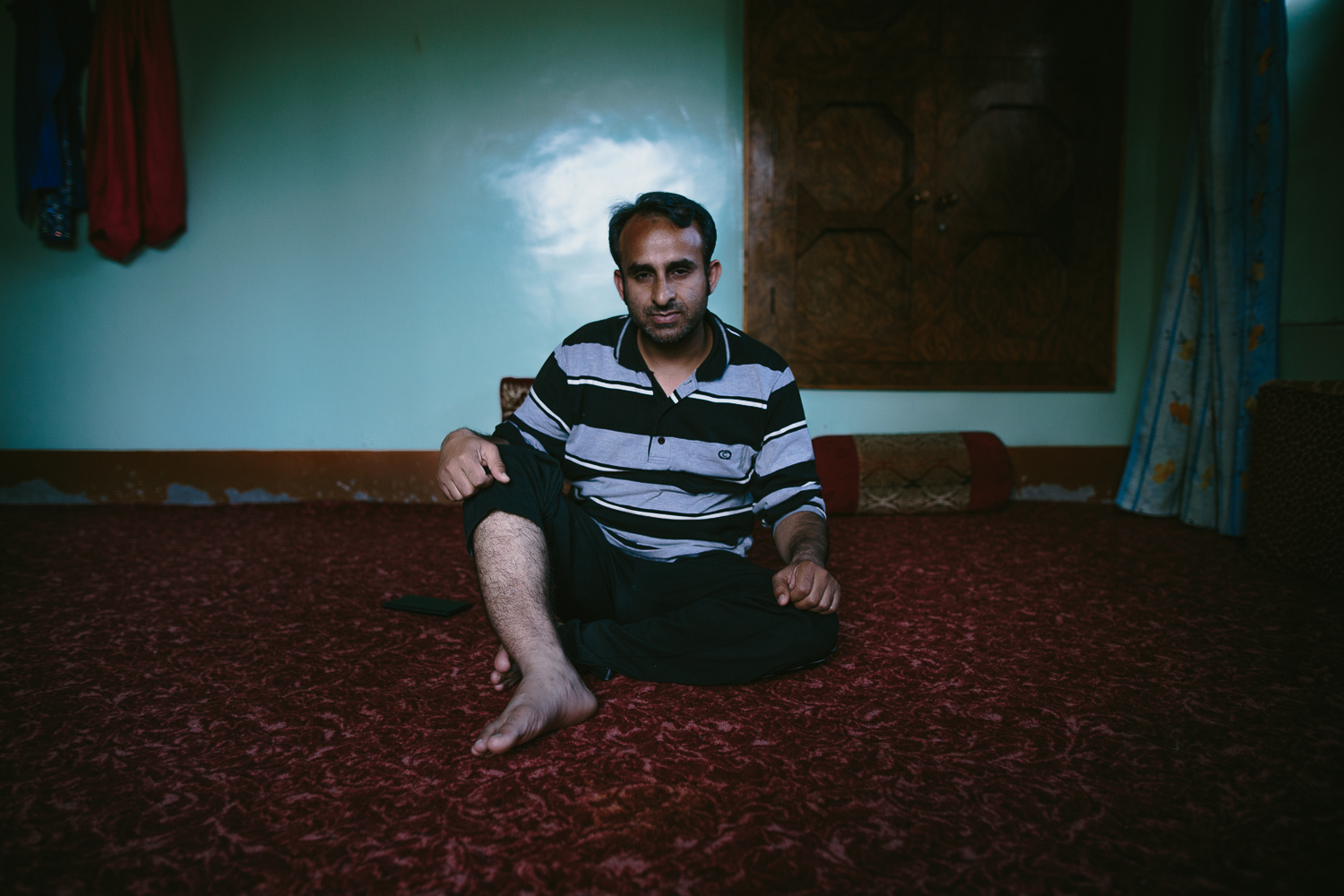
Altaf Ahmed Wani, Palhalan. 

“September 6, 2010, I was on my way back from the office.That day there as a protest on the highway near by because the army had killed some innocent people in a nearby village. They fired in every direction. 4 people died on the spot; about hundred people were injured. I got shot in my leg. I was admitted to the hospital for one month. For a year, I couldn't walk. The first surgery failed and after two years they managed to fix me and I can walk again today. No police have been convicted. When someone tried to go and complain they were put behind bars and tortured.”
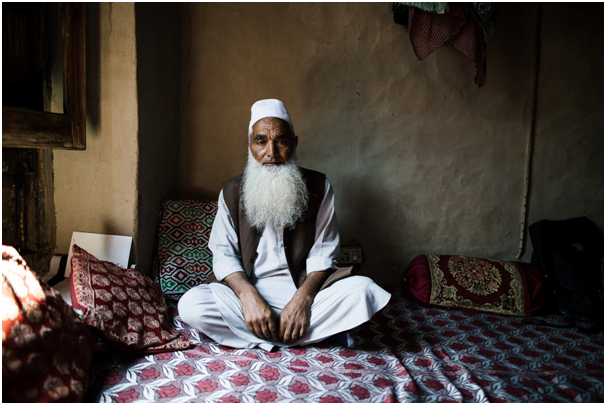
 

 Farooq Ahmad Wani 

“I spent at least seven to eight years in jail for my participation in protests. In 1996, they drove three other detainees and I to the river. There they killed two of my friends in front of my eyes. I was taken to different interrogation centres where they used all kinds of torture treatment on me. I have been subjected to electric shocks on my private parts; they hanged me completely naked to the ceiling to beat me with sticks; they passed heavy rollers all over my body; they made me drink liters of dirty water in one go. My wife and brothers have also been detained and tortured. I have never held a weapon but I haven't kept quiet about our right to self determination.” 

Clampdown, is a familiar word in the Valley with curfew routine in Kashmiri lives. Protests, firing, curfew, arrests, snapping of mobile and internet services, with the Army and Paramilitary taking over the affected areas. The new generations remain alienated, with frustration and anger now defining emotions. According to a 2011 survey, 48 per cent of the Kashmiri youth is unemployed. About 70% of its 10 million population is under the age of 31. They have inherited the sense of injustice and discrimination, added to by the events of and post 2010, the year in which approximately 118 young people were killed in police firing across Kashmir. 
 

Previously published on Citizen India on Monday, August 31, 2015 


Thursday, 9 July 2015

An obscure corner of horror: A remote village in Budgam recounts past repression and continuing lack of justice

Budgam: The village of Sitaharan, 36 km from district headquarters Budgam, is nestled in thick forests overlooked by the infamous Tosamaidan, and flanked from three sides by army camps — each approximately at a distance of under 15 km. It is also known in the area as “mini Afghanistan” owing to the “toughness” of its people and the violent times they have seen. The village is the last outpost of human habitation on the northern side of Budgam district; the terrain is difficult and even now just the occasional mini bus travels to the village from adjoining Khag township some 12 km away.
Zooni Begum
But this is also a village of relatively unknown horrors: during the last 25 years of conflict in Kashmir, the village has seen an “unbearable” amount of army repression. The villagers, in fact, say that almost everyone was tortured at some point during the last 25 years.
“Our plight is still unknown to world. As you can see this is almost a jungle and rarely anybody except the army comes here” says sarpanch Adil Ahmed Sheikh, 56. Adil has been tortured several times. “The torture was such a daily feature of our lives that we have forgotten the number of times we were tortured,” he adds.
The villagers vividly remember the ’90s and are full of stories of collective torture and brutal harassment at the hands of the army.
One name that recurrently comes up is of one Major Bhim Singh of 34 RR, of the nearby Beerwah Camp, who was posted in the area from the middle ’90s to early 2000. “Major Bhim Singh was a sort of de facto ruler of the army in the whole area. And he was terrible with us,” says Mohammad Jabbar Khan, 65, a resident.
Farida Begum
In the document ‘Alleged Perpetrators’ (AP) prepared by the JK civil society, Major Bhim Singh of 34 Rashtriya Rifles is accused of extra-judicial killing of three men, two among them from Srinagar — Ghulam Nabi Lone and Shakeel Ahmed — and one Ghulam Mohiddin Zargar from Lanlab, a village just 5 km from Sitaharan. Case No 24 of this document accuses Major Bhim Singh of human rights violations. And all the three case against him are sub judice in the district court Budgam. On 23 July , 1995 , according to the AP document , the three men, Ghulam Nabi Lone and Shakeel Ahmed both employees in the power department, and Ghulam Mohiddin, a local guide, had gone to Uri for a survey assignment when they were killed by Bhim Singh and later called ‘militants’.
“We don’t want to remember what we have been through. We were tortured like animals and there are many people who were rendered disabled forever,” says Mohammad Jabbar Khan, who was tortured “innumerable” times by the army. The villagers claim that in the ’90s , the army would come to the village and pick up men one by one and
torture them in the ‘provisional torture camp’ in a dilapidated school building . They say they have spent hundreds of nights listening to the cries of the men beaten one by one at the torture camp.
According to the villagers, the army from the nearby camps, Drang and Raiyar, and Beerwah, which are at a distance of 7 km, 10 km, and 14 km respectively, would also come to the village and start beating whoever came in their way. “They accused us of hiding militants and providing shelter to them,” says Adil Sheikh.
One winter night in 1996, remembers Bashir Ahmed, resident of the village, soldiers from 34 RR from the Beerwah camp took away several men for interrogation. “There were around 30 of us, and they gave electric shocks to us. After that, many men never married,” he says. “I was hit on the head and I still get migraines from time to time, and I still feel like a current is passing through my body,” he adds. Bashir also says that some of the men were tortured so severely that they became disabled: “Around a dozen men never married after that. The army crushed their testicles and inserted copper wires in their private organs.”
Fayaz Ahmed (not his real name) is one of the victims of that torture who suffers from permanent impotency. He has a frail physique and limps while he walks. He accuses Bhim Singh of the torture: “He was not a human being, he was an animal. He passed electric
current through my private parts and after that let me go.” Zahoor Ahmed Malik, 40, was forced to drink urine when he was taken to the torture centre. “The things the army did here are beyond human comprehension,” he says. Satar Khan , 67, whose arm was broken during torture says the men used to flee to the forests in order to save themselves from the army and some also went to Poonch district to work as daily labourers, ponywallas et al.
The women were also not spared. Adil Ahmed Sheikh says that while the men used to flee to adjacent villages and towards the jungle, the army would barge into homes and torture the women. Some were also molested, he says. “The army tortured our mothers, sisters and daughters like animals. Many women were raped, but they buried those things in their souls and never talked about it openly,” says Ghulam Rasool Sheikh, a resident.
In August 1999, Farida Begum, 39, was tortured by personnel the Beerwah army camp and rendered disabled forever. “My left arm is disabled. It was twisted by the army and broken at the elbow,” she says. According to her, in late August 1999, three months after her husband died due to torture injuries, a dozen men in plainclothes barged into her house. “I was sleeping with my 14 year-old daughter when the men entered and dragged me out of my bed. Their eyes were bloodshot and they abused me and asked for the whereabouts of militants from the village,” she says. She recounts how the men pushed her aside and began to search, smashing window panes and utensils. “While they were busy searching my home, I, fearing rape, tied my pyjamas with seven knots,” she adds.
Finding no weapons or militants in the house, the men dragged her out. “Outside, around 30 army men flanked me and a Major Singh kicked me on the chest and I fell to the ground,” she says. Then
the men yanked her by the hair and dragged her to the outskirts of the village. “The major twisted my arm and it broke. Then they tied my arms behind my back and blindfolded me and tore off my clothes,” she says, weeping. “They then threw me to the ground and two soldiers sat on my legs and another forced a bottle of kerosene into my mouth. During all this, she says, the army men kept asking her to show them the militants and their weapons. “I told them that I knew
nothing, the only weapons I had are the tools used for wood cutting and agriculture,” she says.
Farida says that after torturing her for hours, the army then poured a bucket of water mixed with chillies on her face. “It was like fire. I felt as
if my body was set on fire,” she recounts. Later, she was thrown into a stream. “Fortunately, the stream was not too shallow and I crawled out and walked in the dark and fell unconscious.” Next morning, the
villagers discovered her unconscious and took her to the nearby Khag hospital where she was treated.
The family filed an FIR against the Beerwah Camp. “Nothing has happened to the case and I am too helpless to pursue it. I put my faith in Allah and ask only Him for justice” Farida says. She adds she wants to forget about that day, but the pain her body still feels does not allow her to. “I get migraines and I can’t sleep properly. My body is always in pain” she says.
In June 1997, Zooni Begum, a frail 45 year old woman had gone to the nearby jungle to collect wood. Suddenly, her 13 year old daughter came running and told her that the army has come. The army men, who were from the Drang camp, caught hold of her and began to beat her up. “They were saying I give food to the militants and that I have weapons at my home. I denied that and they began to slap me and beat me with gun butts,” she says. In broad daylight, the army dragged her from the jungle toward s her village. They took her to her home and tied her up in a room: “They yanked my hair and tied me with a rope. Then they beat me badly.”
The army cordoned off the whole village, and, in her home, Zooni says, the army men tore off her clothes. “Dastgeer Sahab saved my honour. I was praying to God to give me death but not let the animals dishonour me,” she says. At noon, the crackdown was lifted and a semiconscious Zooni was thrown out of her house. “After they threw me out, they
set my house on fire. They said it is punishment for not ‘cooperating’ with the army,” she adds. There was no justice later nor any compensation for her burnt house. She too has not pursued the case out of fear. “When I see an army man, my heart beats fast and sweat breaks out on every part of my body,” she says.
No FIR has been filed against these incidents and the villagers give two reasons for that. One, that they were “assured” by the then-Congress MLA Sarfaraz Ahmed Khan that he “will handle the issue himself” and that the villagers “need not worry”. “We waited for his advice but in the end he never did anything,” says Fareeda.
The second reason, they say, was that there “was no difference between the police and army”.
“We had nowhere to go and the police used to threaten us instead, and never came to our help or filed an FIR against the army,” the villagers say. “Those were dark times and we are simple people, we were concerned about our lives and never went to police stations after recurrent refusals and threats. There were even some policemen who were working for the army and they used to tell them everything about our visits to police stations,” they added.

By Nayeem Rather | Previously Published On Kashmir Reader (
http://www.kashmirreader.com/an-obscure-corner-of-horror-a-remote-village-in-budgam-recounts-past-repression-and-continuing-lack-of-justice ) on 9th July 2015 

Monday, 20 April 2015

Breaking Borders Episode 6 Tortured Past and Present in Kashmir

Saturday, 21 March 2015

Here is What Happened in Hashimpura 28 Years Ago

By Vibhuti Narain Rai,

There are some experiences that stick with you throughout your life. They always stay with you like a nightmare and sometimes are like debts on your shoulders. The experience at Hashimpura Massacre was such an experience for me, says Vibhuti Narayan Rai, then Superintendent of Police, Ghaziabad, UP. On 22 May 1987, in Hashimpura, a locality in the Meerut City, 42 innocent Muslims were killed in cold blood by the personnel of Provincial Armed Constabulary (PAC).

On the night of May 22, 1987, about 45 Muslim men from Hashimpura, a settlement in Meerut, were rounded up and packed into the rear of a truck of the Provincial Armed Constabulary (PAC). (Source: Praveen Jain/Indian Express)

The night of 22-23 May 1987, which I spent in the wild undergrowth along the stream flowing through the Makanpur village situated on the Delhi Ghaziabad border looking for any living souls amidst the dead bodies covered with blood in the dim light of my torch- everything is engraved in my memory like a horror movie. I had returned to Ghaziabad from Hapur at around 10 30 pm. District Magistrate, Nasim Zaidi was with me. So, I dropped him at his house before reaching the residence of the police officer. The moment the headlight of my car fell on the gates of the residence I saw an estranged and shocked Sub Inspector B. B. Singh who was the in charge of the Link road police station at that time.I could tell from my experience that something serious had happened in that area.I instructed my driver to stop the car and go off. B.B.Singh was so horrified that it did not seem possible for him to explain things coherently. Whatever he could convey while stammering about events in a disorderly manner was enough to shock me. I understood that somewhere in his station area the P. A.C. had killed some Muslims.

Why?? How many?? From where?? It was not clear. After asking him to repeat his facts again and again I tried making a narrative of the events piece by piece. According to the picture so drawn B.B. Singh was sitting in his office when around 9′ o clock he heard firing from the direction of Makanpur. He and everybody else at the station thought that there was robbery in progress in the village. Today Makanpur’s name can only be found in the revenue records. Makanpur today has tall magnificent buildings but in 1987 it was all barren land. Through this barren land ran a check road on which B.B. Singh raced his motorcycle towards the village. Behind him sat the station officer and a constable. They had barely covered a 100 yards on the check road when they saw a truck racing towards them from the opposite direction. If they had not ridden the motorcycle off the check road the truck would have ran them over.

According to them what they saw while trying to maintain their balance the truck was yellow in color and had 41 printed on the back. They even saw people in khaki clothes sitting in the back seats. It was not difficult for a police officer to understand that this was a truck belonging to the 41st battalion of the P.A.C. crossing them with some officers of the P.A.C.; but this made the situation more complicated. Why would a P.A.C. truck be coming from Makanpur at this hour?? What was the mystery behind the firing?? B.B. Singh got the motorcycle on the check road and again proceeded towards the village. The scene that he and his officers saw not more than a mile down the road gave them all goose bumps. Before the habitation of the village the check road crosses a stream. The stream goes ahead and enters into the Delhi border. There was a bridge where the check road crossed the stream.

As he reached the bridge and the headlights of B.B. Singh’s motorcycle fell on the undergrowth along the stream; he understood the mystery behind the firing. There were blood stains all over the place. Along the stream, in the undergrowth and in the water there were bodies with fresh wounds in them. B.B. Singh and his men tried to inspect the scene and to guess what happened there. All they could decipher was that there must be a relation between the bodies there and the P.A.C truck they came across on the way. Leaving the constable at the scene B.B. Singh with his fellow officer turned back to the main road. The headquarters of the 41st battalion of the P.A.C. was situated on the Delhi Ghaziabad Marg near the police station. They both headed for the headquarters.

The main gate was closed. Even after arguing for a long time the sentry did not give them the permission to go inside. B.B. Singh then decided to come to the zonal headquarters and tell me about the events.

From what I could understand from the narration it was clear that some event had occurred, the event was horrifying and that Ghaziabad could be in flames the next day. Since the past many weeks the neighboring district of Meerut was facing communal riots and these riots were moving towards Ghaziabad as well.

I first called the district magistrate Nasim Zaidi. He was about to sleep. After that I called the additional S.P. at the district headquarters, a few deputy S.P.s and magistrates and told them all to get ready. In about another 45 minutes we were heading towards the Makanpur village in about 7-8 cars.

Our cars were parked a little distance away from the bridge on the stream. No one had come from the village which was situated on the other side of the stream. It seemed that terror had forced them all to go into hiding in their houses. There were some police officers from the Link road police station though. The weak beams of their torches were falling on the thick shrubs besides the stream but it was difficult to see anything in that little light. I told the drivers to turn the cars towards the stream and turn their headlights on. An area of around 100 yards width was illuminated. What I saw in that light was the nightmare I was referring to in the beginning.

The light of the headlights was not sufficient due which torches were also carried by all the men. The stains of blood had still not dried up and blood was still dripping from them. The bodies of the dead were dumped all around some were stuck in the bushes whereas some were half submerged in the water. To check if anyone was still alive among the bodies seemed more important to me than to count and remove the dead.

We were about 20 people and everybody started looking in different directions to check if anybody was still alive. We would even yell out in between hoping that somebody would answer back, trying to tell them that we were not foes but friends and the injured would be taken to a hospital. But we got no reply. Disappointed some of us sat down on the bridge. The district in charge and I decided that there was no gain in wasting any time. We had to make strategies for the next day and we decided to leave the task of removing the bodies and completing the necessary paper work. We were about to proceed towards the Link Road station when we heard the sound of a cough coming from the stream.

Everyone froze. I leapt towards the stream. Silence fell over the place again. It was clear that there was a survivor but he did not believe that the people looking for him were friends. We started yelling out again and threw light on each individual body and in the end our eyes fell on a body which was moving. Someone was hanging by both hands from a bush with half his body in the stream in such a way that it was difficult for one to tell if he was dead or alive without proper attention. Trembling with terror and believing only after a lot of reassuring that we were there not to hurt but to save, the person who was going to tell us about this horrifying event, his name was Babbudin. The bullet had just missed and went scratching him. Unconscious he fell into the shrubs and in the stampede his killers forgot to check if he was dead or alive. Holding his breath he lay half in the water and half in the bushes and in this way he managed to cheat death. He wasn’t seriously hurt and he walked from the stream to the cars. He even rested on the bridge for some time.

When I met after 21 years while I was collecting material for the book I was writing on Hashimpura, at the same place where the P.A.C. picked him up from, he remembered that I offered him a biddi after taking one from a constable. According to what Babbudin told us that when that day during the regular checking around 50 people were made to sit in the P.A.C. truck they all thought that they were being taken to a station or a jail. The truck was taken off the main road about 45 minutes from Makanpur and stopped at distance down the road. The P.A.C. leapt down from the truck and ordered them to get down from the truck.

Only half the people had hardly got off when the P.A.C. started firing on them. The people still on the truck took cover. Babbudin was one of them. He could only guess what would have happened to the people who got off. The sounds of the firing probably reached the neighboring villages as a result of which noises started coming from them. The P.A.C. people again got on the truck. The truck reversed and again sped off towards Ghaziabad. Here it came to the Makanpur stream and the P.A.C. again ordered everyone to get off.

This time the horrified prisoners refused to get off so they were pulled and dragged from the truck. The one who came out were shot and thrown in the stream and the ones who didn’t were shot on the truck and thrown off. While Babbudin was telling us the whole incident we tried to assess the location of the first crime scene. Someone suggested that the first crime scene could be the stream which flows near the Muradnagar station which is situated on the road from Meerut to Ghaziabad. I called the Muradnagar station using the wireless at the Link road station and found that we were right.

The Muradnagar station had been facing the similar problem just some time ago. Some were found dead in the stream and some were brought back alive to the station.The story after this is a narrative of a long and torturous wait in which the issues relating to the relation between the Indian state and minorities, the unprofessional attitude of the police and the sluggish pace of the frustrating judicial system may be raised.

(The writer was then Superintendent of Police, Ghaziabad.) 

Source: India Resists ( http://www.indiaresists.com/here-is-what-happened-in-hashimpura-28-years-ago/ ) dated: 21st March 2015


NOTE: A Delhi court today (21st March 2015) acquitted sixteen Uttar Pradesh police personnel (Read Killers) accused in 1987 Hashimpura massacre in which over 40 Muslim were killed.

News Source Indian Express link: http://indianexpress.com/article/india/india-others/1987-hashimpura-massacre-delhi-court-acquits-16-up-cops/