Showing posts with label Geelani. Show all posts

Monday, 3 December 2012

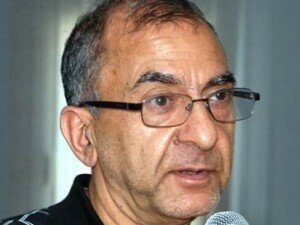
Geelani’s Litany

On death row before he was let off, he sees a mockery of justice in capital punishment

Sar Geelani is recuperating from a surgery done to extract one of four bullets embedded in his chest that had caused him an infection. These bullets are from an attempt made on his life—for which he holds India’s Intelligence Bureau responsible—in March 2005, a few months after he was acquitted in the Parliament Attack case. He had been accused by the Special Cell of the Delhi Police of having masterminded that terror attack inside Parliament premises on 13 December 2001.
Geelani spent two years on death row before the Delhi High Court set him free, ruling that the circumstantial evidence (of call records between him and other accused) did not ‘unerringly point’ to his guilt. He now teaches Arabic in Delhi’s Zakir Husain College, and has been accorded Z+ category security.
He says that he objects to capital punishment not on moral grounds, but practical. In his experience, investigators have prejudices and investigations are biased. “I don’t say that. The law of the land says that,” he says, “A person can be hanged if and only if the following two conditions are met, namely, that the person is ‘guilty beyond reasonable doubt’ and that the crime is in the nature of ‘rarest of the rare’. But in India, where the outcomes of investigations always hover in the realm of doubt, capital punishment should be abolished.”
Geelani is of the opinion that capital punishment risks denial of justice in far too many cases. He mentions last week’s judgment in the Lajpat Nagar blasts case of 1996. The Delhi High Court acquitted two men who had been sentenced to death by a lower court, and commuted a death sentence to one of life imprisonment for another of the accused. This, after they had languished in jail for 16 years. The court also castigated the Delhi Police for ‘grave prosecution lapses’ and ‘inefficiencies’, which it said place a ‘question mark [on] the nature and truthfulness of the evidence produced...’ as a division bench of Justices S Ravindra Bhat and GP Mittal observed.
Terror cases, Geelani believes, are the worst affected by shoddy police work. In the Parliament Attack case, he expresses frustration over the treatment meted out to Afzal Guru, the prime accused. “Afzal [has been] on death row since 2004. He is perhaps the next one to be hanged. This is the most high profile case where the country’s sovereignty was under attack. In a case of this importance, in the largest democracy of the world, Afzal Guru remained unrepresented by a lawyer at the trial stage. This is against the law of the land.”
The Delhi High Court had upheld the earlier death sentences awarded to Afzal and Shaukat Guru (another accused) “despite the same court making a categorical observation that the papers were forged and evidence fabricated by the police,” says Geelani. “I was exonerated as the court observed that I cannot be linked to the case.”
When the case reached the Supreme Court, all confessional statements were dismissed as unreliable. Shaukat’s death sentence was commuted to 10 years of rigorous imprisonment for concealment of facts—for failing to inform the police of what he allegedly knew of a terror plan. That is not what he was charged for, however. “He was finally sentenced for something that he was never accused of at any stage of the trial,” says Geelani.
The courts had accepted that Afzal Guru, a surrendered militant, did not belong to any militant organisation at the relevant time. The Supreme Court also observed that there was no direct evidence of Guru’s involvement in the attack. It also dismissed all confessional statements. The POTA charges against him did not withstand scrutiny either. “Now what is left?” asks Geelani, “His death sentence is based entirely on circumstantial evidence.”
The strongest such evidence against Afzal Guru, according to Geelani, is that he identified the bodies of the assailants who were killed in the event as they tried to force their way into Parliament.
“The police mentioned in my disclosure statement that I had identified the bodies. I refused to sign the statement.”
Afzal Guru’s alleged identification of the bodies was based on the statement of a sub-inspector, HS Gill, who was later sent to jail on corruption charges while the Parliament Attack trials were still underway. According to Geelani, Afzal Guru had said “many times” in the trial court that he had not identified any assailant. Yet, adds Geelani, Gill’s account still went unchallenged in the trial court because Guru had no lawyer to represent him. “My situation would have not been different from Afzal’s had I not been properly represented by lawyers.”
Geelani wonders how an identification of militant bodies, for which the evidence was so inconclusive, could be taken as proof ‘beyond reasonable doubt’ that Afzal Guru knew who they were, let alone as proof of his knowledge of their sinister designs.
“The then Deputy Prime Minister LK Advani made a statement in Parliament that [the killed militants’] faces were like Pakistanis’. Advani himself looks like a Pakistani. After all, he was born in Pakis- tan. Pervez Musharraf looks like an Indian as he was born in Delhi’s Nehar- wali Haveli. The court’s contention was that they were Pakistanis simply because no Indian claimed their bodies. So many pictures are published everyday in newspapers listing unidentified bodies, and many of them remain unclaimed. By the court’s logic, all these unclaimed bodies have to be of Pakistanis,” says Geelani, bursting into laughter.
The Supreme Court’s judgment upholding Afzal Guru’s death sentence had read: ‘The incident, which resulted in heavy casualties, has shaken the entire nation and the collective conscience of the society will only be satisfied if capital punishment [is] awarded to the offender.’
In Geelani’s interpretation of the judgment, “Afzal was made a scapegoat to satisfy the collective conscience of the nation.” He draws from his own experience. “I had become a big terrorist overnight, such a big terrorist that even police officials were afraid of me. They were scared of their own propaganda.”
He pauses to collect his thoughts, and then alleges that court perceptions are shaped by media reports. “This was our first hearing in court after our arrest. It was the special court with a special judge SN Dhingra, I think: he was there on a special assignment too. Shaukat’s wife, Afsan, was crying in court. The judge asked her, ‘Why are you crying?’ She wanted to know why she was being held if her husband had done something wrong. I was shocked to hear what the judge said. ‘You should have thought about it earlier before you plotted the Parliament Attack,’ the judge retorted. This was the first time we were in court. The judge had no case details with him. He pronounced a judgment six months before the chargesheet was filed. We were not standing there as ‘the accused’, we were already ‘guilty’.”
Geelani was agonised by much else too. “We were made to sign our statement in custody and not in the presence of a magistrate. But one magistrate appeared in the special court and deposed on oath that we had deposed in front of him, without police presence… [that] only he and his typist were present in the room. I had never seen that man before. I protested… Can you trust a system like this with capital punishment?”

Previously Published on (C) Openthemagazine

Wednesday, 27 June 2012

In Kashmir, Killing Ebbs, but Killers Roam Free

BONIYAR, India — After decades of war, Kashmir is blooming again. Hotels are bursting, roads are being fixed and offices rebuilt. But with the guns silenced, India must soon decide whether justice will be as welcome as the tourists.

Mass murderers walk the streets openly, having killed thousands of people who are buried in unmarked graves in scores of secret cemeteries. This beautiful village has one such graveyard. Nine years after Indian police officers and troops deposited hundreds of bullet-ridden corpses here as part of their campaign to suppress an independence movement supported by Pakistan, dirt mounds still rise above the shallow and unmarked plots as if the circumstances of the deaths left the earth above the bodies unsettled.
Atta Mohamad Raja Khan, the 70-year-old farmer who dug the graves, said one plot contained the remains of a 2-year-old boy. Others held teenagers and dowagers. Mr. Khan’s graveyard quickly filled, so he buried only a fraction of the tens of thousands killed over more than 20 years of dirty warfare.
Many of the buried were militants, including foreign mercenaries whose deaths and quick burials are often accepted as the wages of war. But myriad innocent bystanders were murdered in clumsy government plots. None of the suspected killers from the military has been arrested.
Tensions still lie just below the surface. On Monday, a fire in a revered Sufi Muslim shrine in Srinagar, Kashmir’s capital, set off clashes between the police and rock-throwing Muslim protesters. Six people were hurt after the police fired tear gas. But so far the fire has not led to wider unrest.
Jumma Khan, 45, was one of the bystanders massacred. A blacksmith’s apprentice, he lived in a mud house on a mountainside in the Anantnag district with his wife and 11 children far from any road. At 2 a.m. on March 24, 2000, soldiers broke down his door and dragged Mr. Jumma Khan away. Just four days earlier, more than a dozen gunmen dressed in fatigues had systematically massacred 34 men and boys in a nearby district, and the military was under pressure to find the killers.
Mr. Jumma Khan’s oldest child, Abdul Rashid, said his father had been targeted because he was poor and had a beard, which made him look like a militant.
“They told my mother, ‘Don’t worry, he’ll be back in a half-hour,’ ” Mr. Rashid recalled in an interview on the mountainside near his home. She nonetheless threw herself on her husband, and the soldiers beat her, he said.
Later that morning, Mr. Rashid discovered that three other men in the area had been similarly taken.
The next day and miles away, Zahoor Ahmad Dalal, 22, drove home after working all day in the family’s fabric shop. He had dinner at 6 p.m. and left for his customary walk 30 minutes later. He did not return. The family fanned out to find him but never did.
The military soon announced that it had found five foreign militants responsible for the recent massacre hiding in an Anantnag hut. During the battle, the hut was burned and the militants killed, the military said. The charred bodies were buried without autopsies.
After the announcement, Mr. Rashid feared the worst, he said. His village organized a protest march to demand that they see those arrested, but the police shot and killed seven of the protesters — including Mr. Rashid’s younger brother. Local outrage grew. Facing a growing revolt, officials allowed families to unearth the bodies of the alleged militants.
Families recognized the dead immediately. In a bungled attempt to hide the victims’ identities, soldiers had forced each to don military fatigues but had neglected to remove the victims’ old clothing, still visible under the burned fatigues. Genetic tests eventually confirmed their identities. There were no foreign militants.
An investigation by India’s elite Central Bureau of Investigation charged five soldiers with murder. The Supreme Court has ordered the army to decide by the end of July whether to court-martial those involved or allow a civilian trial.

Mr. Rashid said he was not optimistic that the perpetrators would ever be brought to justice. Twelve years have already passed. “We are like worms to them,” he said. “We will be crushed under their shoes and die.”
The New York Times
India tried to suppress a secession movement in Kashmir.
Dar Yasin/Associated Press
Arshad Andrabi with a picture of his brother Jalil, a human rights lawyer who was seized in Srinagar in 1996 and killed.
Rifat Andrabi said much the same thing. She and her husband, Jalil Andrabi, a prominent Kashmiri human rights lawyer, were driving through Srinagar in 1996 when they were stopped at a military roadblock.
Instead of simply checking the Andrabis’ identity papers, Mrs. Andrabi said, Maj. Avtar Singh took Mr. Andrabi into custody. Mrs. Andrabi, also a lawyer and the mother of three young children, panicked. Unable to drive, she hired a motorized rickshaw to follow. But the rickshaw could not keep up, and she returned home.
Mr. Andrabi’s mutilated body was found three weeks later in a burlap bag on the banks of the Jhelum River.
Mrs. Andrabi and her husband’s brother, Arshad Andrabi, have spent 16 years seeking justice against Mr. Singh and others. In the meantime, military and government authorities failed to carry out court orders to arrest Mr. Singh. When he was found to be in the United States, they declined to seek his extradition.
On June 9, Mr. Singh shot and killed his wife and two of their children in their California home before apparently committing suicide.
Mrs. Andrabi said that her three children — then 2, 3 and 6 — waited every afternoon for their father to return from work, unable to understand what his death meant.
“Every time they heard a honk at the gate or a knock on the door, they would go running and shout, ‘Papa is back!’ ” Mrs. Andrabi said through tears. “We have gone through hell, but we will not stop.”
The Jammu and Kashmir State Human Rights Commission released a report in October confirming the existence of 2,156 unmarked graves in 38 cemeteries in just three state districts. The commission recommended that state officials use genetic tests to identify the bodies, and create a commission to investigate and prosecute those responsible. Under Indian law, the state must respond within a month. Nine months have passed, and there has been no state response.
Top army officials have publicly insisted that the military’s immunity from prosecution in Kashmir, enshrined in law, is sacrosanct. And allowing even a few cases to go forward could expose many to danger, rights activists say.
Mr. Khan, the gravedigger in Boniyar, described an almost industrial body disposal process. An official usually visited a day or two before the bodies arrived to tell him the precise number of graves needed so that he could start digging. The bodies arrived by truck from far-flung areas, so many were involved, he said.
Parveena Ahangar, the chairwoman of the Association of Parents of Disappeared Persons in Jammu and Kashmir, said her group had documented hundreds of cases in which officials spirited away people who have never been seen since. In her small office, she has stacks of pink files with pictures and witness statements. The names, ranks and units of soldiers and police officers accused of perpetrating the crimes are sprinkled throughout the documents.
Ms. Ahangar says she knows the identity of the three officers who took away her 16-year-old son, Javid, on Aug. 18, 1990. She has filed repeated court petitions to have the officers punished, but nothing has happened. Military officials have offered her money to drop her petitions but she has refused such deals just as she has refused to accept that Javid is almost certainly dead, she said.
“I want my son back,” she said, “and I want justice.”
(C) Previously Published On The New York Times

Tuesday, 12 June 2012

Why The Death of Major Avtar Singh Is Not Justice Served


“… it is not merely of some importance but is of fundamental importance, that justice should not only be done, but should manifestly and undoubtedly be seen to be done.”

On June 10th, 2012 Major Avtar Singh, wanted in India for the killing of over a dozen men including human rights activist Jaleel Andrabi, shot and killed himself along with his wife and two children in California. This brutal end was seen by many people here as ‘divine retribution’ for his gruesome crimes, but with the death of Major Avtar was justice really served?


Jaleel Andrabi was abducted by a group of Army personnel led by Major Avtar Singh on the Eid of Match 8th 1996, as he was heading home with his wife. His wife and car were left behind and later when the Bar association moved to high court seeking his whereabouts, both Army and BSF denied he had been picked up. The body of Jaleel Andrabi was recovered 19 days later (27thMarch) from river Jhelum near Rajbagh in Srinagar; his upper half torso had been covered in a bag while hands tied behind him with rope and a stone tied to his body.


The SIT formed under the directions of High Court investigated and found that Major Avtar Singh had abducted Jaleel Andrabi and a renegade Sikander (among others) had been complicit in this crime. Barely a week after Jaleel Andrabi’s body has been fished out from Jhelum, seven more bodies were found at Pampore including that of the renegade Sikandar. Further investigations led the team later to another renegade Mohammed Ashraf Khan, alias Umar. Umar’s statement implicated Major Avtar Singh for the murders of Jaleel Andrabi, renegade and complicit Sikandar and his other associates. When these murders took place Major Avtar Singh was part of the 35 Rashtriya Rifles based in Rawalpora, Srinagar. In response to the SIT report filed before the High Court on 10 April 1997, the Army submitted that Major Avtar Singh had been acting in his personal capacity. While Army made this claim, the statement of Umar ran contrary to this. He had earlier confessed that along with Major Avtar Singh ““Six persons, namely Sultan, Balbir Singh, Dr Vaid, Mushtaq and Hyder were also present…” Clearly Major Avtar Singh was not acting alone here and a whole apparatus seemed to be involved in these killings. Ironically none of those mentioned by the witness Umar have been named in the charge sheet and it is more likely they are still in active service. Major Avtar could not have acted in his singular capacity as he used all state tools and facilities to kill and systematically followed up with erasure of evidence. Pertinently lawyer Jaleel Andrabi had addressed the UN Human rights Commission at Geneva sometime before his abduction and killing (in 1995), which at the height of conflict in Kashmir caused much unease to the state.


Major Avtar Singh remained ‘untraceable’ for police even after the court had asked for the impounding of his passport. The police claimed in 1998, that the Major was not traceable while Army had maintained that Major Avtar, originally from Ludhiana based Territorial Army 103, had been ‘disembodied’ from service (a journalist later had easily located and interviewed Major at the Territorial Army barracks in Ludhiana). The two judges hearing this case were transferred just before the next hearing and before any verdict could be passed; the case falling into cold storage thereafter. 


Other than the Andrabi case, Major Avtar Singh is also accused of killing Batmaloo businessman Ghulam Qadir for extortion (18th February 1996, killed even after ransom had been paid) and in yet another incident Abdul Majid Shah’s dead body was found in the Jhelum with a stone tied to it.


Despite court orders for impounding his travel papers, Major Avtar Singh was successful in obtaining a passport and fleeing to Canada from where he proceeded to USA. While Major Avtar fled in 2005, repeated attempts to get him extradited by the state government from 2006 were lost in New Delhi’s reluctance. If Major Avtar Singh had acted in his personal capacity while committing these gruesome crimes, the Indian state should have no reasons to firewall his conviction. On the contrary his conviction would have cleared New Delhi of accusations that Avtar Singh acted just as a state arm assigned to silence voices in Kashmir. The disinterest of Indian government in wanting to get Major Avtar Singh extradited gave enough indication to reasons and intent, when the same government could get Abu Salim extradited from Portugal in spite of a stay on order from the Supreme Court of Portugal. While Abu Salim was tracked and located in spite of his having forged travel papers and mutated identities, Major Avtar Singh travelled freely on his original travel papers and own identity despite a lookout notice. And all this could not have been possible unless he had support from ‘within the system’.


The system that nurtured him and facilitated him clearly did not want him to stand trial, lest he speak up. Major Avtar Singh is not an exception to Kashmir nor are the efforts of ‘the system’ to protect and cloak such crimes. Such crimes are galore here, but the Major Avtar Singh case stood out for the brazen efforts to shield him, facilitate him and deny justice in spite of overwhelming proof against him. In this fight between Justice and the Jackboot system, ‘the system’ seems to be having its way as always. 


When in February last year his wife lodged a case of domestic violence against Major Avtar and he was located in California, the hopes of extradition and justice were again rekindled. Despite him being publicly located, New Delhi made no serious efforts to seek his extradition. In an interview later given to Open Magazine he had confessed that “If the extradition does go through, I will open my mouth, I will not keep quiet.’’.


Justice would only seem to have been dispensed when Major Avtar Singh would stand trial along with others complicit; but that would have exposed ‘the system’ that helped him and insulated him. While Major Avtar Singh may be dead along with his innocent family, other Avtar Singh’s of these crimes are unaccounted for and left befit of answerability. 


The silence of a dead Avtar Singh means that this case, as with other cases, shall be heading for a quiet burial. Avtar Singh’s death does not mean Justice has been served, it only means Justice has been buried, quietly. Nature may have its own way of retribution with the death of Major Avtar Singh, but Justice in reality is still pending.

(C)  Saadut Hussain is a Srinagar-based blogger
Previously published on Speaking Mind  

Saturday, 2 June 2012

The Sentencing of Dr. Ghulam Nabi Fai (Setting the Record Straight )


On March 30, 2012, Dr. Ghulam Nabi Fai, the man the international diplomatic community has known for more than 20 years as the ambassador for Kashmir to the United States, stood before Judge Liam O’Grady in a federal court in Virginia and received a sentence of two years for the part he played as Director in funding the Kashmiri American Council, using contributions that allegedly had skirted certain tax regulations regarding how they may be made to a non-profit organization.  The technicalities involved in the sources of that money and how it ended up in the bank accounts of the KAC are still too complex for me to really understand, and probably not worth going into anyway, but its clear from the outcome that some violation of tax laws did occur and Dr. Fai was willing to take the rap for it.  In fact, both he and his wife believe sincerely that the judge was quite fair in handing down the sentence.  Although Dr. Fai’s reputation was sullied momentarily by charges that he was a spy for the Pakistani ISI and illegally lobbied members of Congress and two presidents, none of that proved true, and such charges were voluntarily dropped by the prosecution.  

What is quite dismaying, however, is the mincemeat that was made of this sentence by the press.  Despite the rather mundane issue of so-called tax dodging, many in the press continued to allege falsely that he had been convicted of being on the payroll of the ISI, convicted of being an unregistered lobbyist,  convicted of advocating and propagating the Pakistani position on Kashmir, and convicted of trying to influence the American government for the benefit of Pakistan.  So it is important that we set the record straight.   

Although initially charged under the FARA act [FARA refers to the Foreign Agents Registration Act] as an unregistered agent of Pakistan, Dr. Fai was never convicted on this allegation, which seemed clearly intended to support negotiations the U.S. and Hillary Clinton were engaged in with India at the time. Politically motivated and entirely fraudulent, the U.S. government believed that Dr. Fai’s reputation and career were expendable for whatever trite and meaningless advantage it may have offered in the politics of deal making.   
 
As his attorney, Nina Ginsburg stated during the hearing, “Judge, I think Mr. Kromberg’s arguments to the Court are appalling.  [Federal investigators] have a lot of words that were captured in intercepts, 20 years of intercepts, hundreds of thousands of interprets, and Mr. Kromberg cannot stand in front of this Court with one example of a statement, a public statement by Dr. Fai, a writing by Dr. Fai, a position taken at a conference he sponsored, not one, not one word, that is anything that could be characterized as propaganda for the Pakistani government.  
 
“It is an outrage for [the prosecutor] to say that that is what that man spent 20 years of his life doing when his writings, which we, unfortunately, took up a lot of paper, and I apologize for burdening the Court, every one of his writings, every declaration of every one of those conferences, what came out of the mouth of this man was, [quote] I’m not taking a side.  This is important, tens of thousands of people are dying, pay attention to what’s happening in Kashmir.  
 
“And his letters,” Ms. Ginsburg continued,  “he submitted letters to two Presidents of this country saying, I’m not taking a position, everyone has to give something, no one is going to be satisfied.  
 
“There is not one word that Mr. Kromberg can point to that Dr. Fai ever uttered that was propaganda for the government of Pakistan.  
 
“He received suggestions from people who would participate in these conferences. He accepted some and rejected some.  Topics, one of the topics that appears in these communications, the Pakistanis want him to raise the matter of 2,700 mass graves discovered in Kashmir.  
 
“Well, the Pakistanis didn’t have to tell him that that is a topic that should be discussed at an international peace conference.  There were 2,700 mass graves discovered in Kashmir,” his attorney added. 
 
Dr. Fai was greatly honored and supported by people from all faiths.   Christians, Jews, Muslims, Hindus, Buddhists, Zoroastrians, and even atheists wrote dozens of letters regarding Dr. Fai to the judge.  These were people from the Unites States, United Kingdom, Netherlands, Norway, Denmark, Thailand, India, Pakistan, Canada, Bahrain, Qatar, Turkey, from both sides of the ceasefire line in Kashmir, and many other countries.  The courtroom was filled to capacity with people who came from places like California, Kansas, Illinois, Ohio, New York, Pennsylvania, Maryland, Virginia, Washington DC, North Carolina, Connecticut, Massachusetts, and other states.  
 
The judge publicly took the note of the letters, acknowledging the people in the court in a positive manner at least twice, and demonstrated great appreciation for the cause of the people of Kashmir.  It’s an interesting and ironic twist that, although the government may have gained some short-term advantage with India in filing spurious charges against Fai,  the case against India regarding Kashmir gained greater mileage and publicity in the long run since it also became obvious that an airing of the issues convinced a number of people involved directly and indirectly with the case, including the judge, that the many years of sacrifice given by Dr. Fai to his country was sincere and justified. 
 
“I learned a whole lot reading this material,” Judge O’Grady declared.  “I don’t for a minute question that [Dr.] Fai is a true patriot of Kashmir, even though he is a U.S. citizen, and the people that he has advocated for.  I think he also loves the country and its people, and it’s reflected in his writings and it’s reflected by the people that are here today.”  
 
Efforts by the prosecutor to paint Dr. Fai as a “shill” for Pakistan fell on deaf ears.  Pointing out the prosecutor, Ms.Ginsberg said angrily,  “Mr. Kromberg’s arguments to the Court are appalling in light of the fact that the Government originally charged Dr. Fai with a FARA offense, elected to drop that offense, and is now essentially making a closing argument that he would make to a jury if Dr. Fai was charged with violating the FARA statute, all without giving him the slightest ability to refute with facts.”    The prosecution had dropped the charge entirely on its own, without negotiation or effort by the defense, before the case ever reached the court.  

“Judge,” she said,  “Pakistan would have Kashmir annexed to Pakistan. Dr. Fai is a Kashmiri.  He doesn’t have to have Pakistan tell him that India shouldn’t be murdering tens of thousands of Kashmiri people.”    
 
It was the genuineness of the cause of Kashmir and the succinct articulation of Dr. Fai which caused the judge to make clear that he was totally convinced that the accused in no way misrepresented the people of Kashmir when he said in his closing remarks, “I see no reason why you can’t continue to advocate on behalf of the Kashmiri people and to write.”  He shared his belief in that cause when he added, “I hope that this cause continues to be identified as an important international matter.  And good luck to you.”  
 
The people of Kashmir should remember that Kashmir is not a bilateral issue between India and Pakistan but that it has its own international dimension as mentioned by Judge O’Grady.  While the efforts of Dr. Fai have been somewhat muddied by these waters, the river flows on and the water will clear by these facts that have been revealed through this legal process.  Dr. Fai continues to stand strong and, God willing, he will continue to advocate the cause of Kashmir while he is incarcerated.  
 
Once he is released, he will again advocate this just cause before the international community, because he has been given the full support and confidence of American jurisprudence and was in fact encouraged by the judge to continue his work.  That should be evidence in and of itself that the original allegation that he was acting as a foreign agent for Pakistan was completely false and without substance.  The judge was eminently clear in recognizing the ongoing tragedy in Kashmir, acknowledging the many years of labor by Dr. Fai for his own homeland, and a full acknowledgement of those facts was made possible in public through this legal process.  
 
A hero is someone who is willing to give his life for the cause of others. That description fits this man.  He has given all that he could and more.  No one I know or have known in my extensive experience in the political arena has demonstrated the selfless commitment and dedication I have seen in Dr. Fai.  Kashmir is blessed and the world is blessed as well by his fine example.   It is time that we all recognize that Dr. Ghulam Nabi Fai is a true hero for having raised the plight of Kashmiris to the level of global consciousness, and I personally owe him a deep sense of gratitude for the beautiful example he has been to me. 

Previously Published on Al-Jazeerah by Paul Barrow 

Monday, 28 May 2012

Release Dr. Muhammad Qasim | A Prisoner Of The State

Dr. Muhammad Qasim: A mission, A vision 
HE IS DYING BEHIND THE BARS, DOES ANYONE CARE ??? 
Prisoner of State


Dr. Muhammad Qasim is set to complete 20 years of imprisonment in the month of June 2012. he was arrested in Feb 1993 for holding political views that are unacceptable to the establishment, he was released on bail by the TADA court Jammu in March 1999 and was rearrested in the same case in Feb 2000 on his return from UK after attending Kashmir conference there.


      Dr. Muhammad Qasim’s Health condition in prison:He has lost more than half his eye sight (-4.75 D) as he is regularly loosing his vision he has been advised Lasik by the doctors. He has been advised surgery by the orthopedist for his L4-L5 disc. He is regularly taking medicine for erosive duodenitis, chronic gastritis and intestinal ailment .Jail authorities never showed any concern for his ailments with the result his health is deteriorating with every passing day.

              JUDICIAL COURSE AND GOVERNMENT’S HARSH APPROACH:Dr. Muhammad Qasim was acquitted by the TADA court Jammu in July 2001.Government of India instead of releasing him booked him under the so called public safety act (PSA) and challenged his acquittal before the supreme court of India and the supreme court of India sentenced him along with two other persons for life.

Dr. Muhammad Qasim completed 14 years (mandatory period of life imprisonment) in Feb. 2008, accordingly state Review board recommended his release but politically biased government rejected review boards recommendations. It is the lone case in the history of lifers in Jammu and Kashmir where recommendations of the review board for the release of a lifer were rejected by the home department.

JK High court (SB) asked government you reconsider the review boards recommendations for Dr. Muhammad Qasim’s release with in 90 days in June 2010.Governmnet of India yet again showed her ruthless attitude and challenged the said order before the double bench of the JK high court. JK high court while setting aside the SB order adding that his case can be considered only after 20 years , made an important observation as under: 31:Irrespective of the provisions i.e. section 401 and 402 of the state code of criminal procedure, which corresponds to section 432 and 433 of the central code. The power of the executive is absolute and unfettered to remit sentence.(LPA No:120/2010)

Government of India did not give any head to this observation this , Dr. Muhammad Qasim remains in prison. You can do a lot!

Join The campaign spread the word


By becoming a member of this campaign all you have to do is to forward this brief profile of Dr. Muhhamad Qasim to all such organizations, Committees, Media men and individuals who are working for human rights and political prisoners, by doing this you are not supporting an individual but a just cause.


Wednesday, 16 May 2012

Geelani digs deep into his eventful past


Chairman of Hurriyat Conference (G) Syed Ali Shah Geelani talks about his family background, hardships he faced to attain education and his journey from a north Kashmir hamlet to Srinagar. In an exclusive interview to Greater Kashmir Senior Editor Javaid Malik, Geelani reveals how he first became a reporter then a teacher and a politician.
Q. TELL US SOMETHING ABOUT YOUR CHILDHOOD?
I was born in a small hamlet Khonus located on the border of Sopore and Bandipora in north Kashmir on 29, September 1929. I belong to a very humble background. My father used to work as a seasonal coolie and earn Rs 10 monthly. But during those days Rs 10 meant a lot. We had goats and hens in our home. Despite poverty we used to live a peaceful life. My father was uneducated but he wanted his children to get education.  He sent my elder brother Syed Meerak Shah Geelani to a Maktaba (religious school) at Hardshiva village in Sopore run by late Syed Sonaullah Shah. My elder brother got religious education there. Shah Sahib was an expert of Arabic language. We were three brothers and two sisters. My parents lost their first son soon after he was born. Otherwise we would have been six. 

Q. TELL US SOMETHING ABOUT YOUR SCHOOLING DAYS?
I got my initial education at Botengo primary school. We had to walk up three to four kilometers to reach from our village to Botengo. Our teacher was Pandit Nitayanad. He was a noble soul used to teach us with love and affection. Students used to give him one kg rice and eggs as fee. Master Nitayanand despite being a Pandit used to teach us Deeniyat (Islamaiyat) and other books. He knew Urdu, Arabic, Persian and other languages.  He was a very good teacher and used to love his students. Memories of old days are very sweet. No doubt there was lot of poverty but there was lot of love, affection and humility; people used to respect each other. There were no fights, no discrimination on the basis of caste, creed and colour. I have spent my childhood in a very peaceful environment. We were so poor that we couldn’t afford to buy the books. We used to depend upon on the books of our classmates. I secured third position in Primary school. There was no Middle School or High School nearby our village. I had to join a High School in Sopore to pursue my further studies.

Q. ANY INCIDENT OF HIGH SCHOOL WHICH YOU STILL REMEMBER?I got slapped twice when I was in my High School. Once I plucked a flower and I was punished. Second time I was slapped when I was in class VI. I was the monitor of my class.  Our form teacher late Habibullah Wani of Nadihal Bandipora went to principal’s office to discuss some issue. When he returned there was lot of noise in the classroom. He became very angry and slapped me saying, “You are the monitor of the class. It was your responsibility to maintain discipline.”  I still remember these two slaps. I used to get Rs 3 as scholarship in Sopore High School as I had secured third position in Primary school.

Q. WHERE DID YOU PURSUE YOUR HIGHER STUDIES?
My story is very heartrending. I have written about it in my autobiography Wular Kinarey. I had to cover 18 miles everyday to reach the school. I had to leave  very early. My elder sister got married in Dooru and I started staying in her house so that I am able to reach the school on time. Till VIIth standard I pursued my studies from Sopore High School. In class VIIth incident took place. Late Muhammad Din Fok from Lahore visited one of their relatives at Sempora late Ghulam Muhammad Khadim, he was also from Lahore. Late Mubarak Shah, elder brother-in-law of my sister, used to work in the Nursery of Khadim Sahib. One day Shah Sahib took me along where I met Muhammad Din Fok. After meeting me, Fok Sahib told Shah Sahib that  I am very sharp and he would take me along to Lahore and get me admitted in a good educational institute. He took me along but instead of sending me to some school he sent me to his elder daughter’s house at Muzang as a domestic help. I stayed there for one year and I just kept on weeping as I was in a shock. My brother-in-law, Abdul Aziz Shah was an employee of Women’s college Lahore. Even my elder brother got appointed in the same college and I returned to Sopore after both of them intervened. I took admission in Baba Yousuf School in Sopore but I couldn’t complete my education there. After sometime my elder brother Meerak Shah Sahib came home and took me along to Lahore. I again got chance to complete my studies in Lahore. First I tried to commit holy Quran to memory, but couldn’t do it fully. Then I got admission in Oriental Night College where I did my Adeeb-e-Alim. During daytime we used to get religious education and in night we used to attend the college. Most Kashmiri students used to go to Lahore to pursue their studies. It used to be the centre of education for Kashmiris. Hafizullah Shah, elder brother of the former DGP of JK Ghulam Hassan Shah, used to be in Lahore. I would stay with him there. He led the prayers in a Mohalla Geelania. I have stayed in a Masjid at Lal Kuan. In Lahore every Masjid those days was equipped to provide religious education to youth.

Q. WHEN YOU RETURNED FROM LAHORE DID YOU LOOK FOR A JOB?
Yes of course. Those days late Ghulam Ahmed Ashai was Inspector of schools. I would visit his office regularly. He provided me with a leave chance here and there. My uncle Syed Muhammad Yousuf Shah Geelani led prayers at Lam Reshipora near Bandipora. He is the only Imam in JK’s history who led the prayers at one place for 60-years. He was a very influential man. He took me to late Muhammad Anwar Khan. He (Khan) gave me a letter addressed to Moulana Masoodi, who was the general secretary of National Conference those days. He kept me with him at Mujahid Manzil in old city. Those days Moulana Masoodi used to look after Khidmat newspaper. He asked me to work as a reporter in Khidmat and it was my first full fledged job. In 1946 late Sheikh Sahib raised the slogan of “leave Kashmir” which led to government launching a crackdown on Mujahid Manzil and I had to return to Sopore.

Q. WHEN DID YOU RETURN TO SRINAGAR AGAIN?
Second time I returned to Mujhaid Manzil was in 1947. Moulana Masoodi had come to Handwara and from there he arrived at Watlab in Sopore.  Moulana Masoodi was wounded as his arm was bandaged. Those days I was heading a team of labourers who were constructing the Watlab road. I heard that Moulana Masoodi had come to Watlab. I went to see him. One Army officer and late Ghulam Mohidin Sofi were accompanying him.  When Moulana Masoodi was leaving I told him that I am jobless. He told me to come to Mujahid Manzil. I didn’t know how to reach Srinagar as there were no resources available with me to reach there. During winters many fishermen from Srinagar used to visit Wular for fishing.  I requested the fishermen to take me along to Srinagar and they readily agreed. I reached Mujahid Manzil and saw Moulana Masoodi sitting in the lawn.  He saw me and told me “you have come, ok stay back.” I stayed there for four years. I again pursued my studies. I enrolled myself in the University of Kashmir for the course of Adeeb-e-Fazil. In the first convocation of KU I got the degree of Adeeb-e-Fazil. After that I got the degree in Munshi Fazil, Urdu Honors and Persian Honors. I pursued my higher studies under the guidance of Moulana Masoodi.

Q. DID YOU GET A PERMANENT JOB AFTER GETTING THESE DEGREES?
Soon after I completed my studies, Moulana Masoodi told me to join Police Force but I told him that I am not interested in joining the belt force. Ghulam Rasool Danposh and Ghulam Hassan Shah, who later became DGP, also joined the Police Force during those days.
 One day Moulana Masoodi called the then Inspector of Schools Syed Tayib Shah to Mujahid Manzil and told him to get me appointed as a teacher. I was appointed as teacher in Pather Masjid Primary School and I got the order in Mujahid Manzil. For one year I worked as teacher in Pather Masjid Primary School. After one year I was transferred to Rainawari High School.  During those days Qari Saiffudin, who was associated with Jamaat-e-Islami, used to teach there. Through him I was introduced to Jamaat. From Rainawari High school I was transferred to Raghunath Mandir Middle School Kani Kadal. I stayed there for one year. I worked as a teacher in Srinagar for three years.

Q. YOU REVEALED THAT MOULANA MASOODI HELPED YOU COMPLETE YOUR STUDIES AND GET YOU A JOB. THEN WHY DIDN’T YOU JOIN NATIONAL CONFERENCE?
Moulana Masoodi never told me to join National Conference. He taught me and fulfilled my needs. He taught me like his son. When I was in Raghunath Mandir  Middle school I had brought the books for FA and I wanted to pursue English Honours, but unfortunately Moulana Masoodi’s father underwent an eye surgery and he went to attend him. Many Jamaat activists used to come to Mujahid Manzil to meet me. Late Mohiuddin Sofi and other NC members complained to Moulana Masoodi that Mujahid Manzil has become a den of Pakistanis (smiles). After that Moulana Masoodi asked then Inspector Schools late Noorudin Sahib to transfer me to Bomai Middle School close to my native village. It was a big set back for me as I couldn’t pursue my further studies.

Q. WAS MOULANA MASOODI YOUR ROLE MODEL?
I was very much impressed and inspired by the personality of Moulana Masoodi, his honesty, his simple way of living. He was very intelligent, dedicated, and a perfect gentleman. The biggest quality he possessed was that he used to live a very simple life. He was well educated, great scholar and a teacher.

Q. AFTER BOMAI MIDDLE SCHOOL WHAT WAS YOUR NEXT DESTINATION?
I worked in Bomai Middle School for four months. During those days there was an Intermediate College in Sopore. Late Jalaluddin Mufti used to be principal of that college. He knew me as he used to come to Mujahid Manzil. A vacancy of Urdu and Persian teacher fell vacant in the college. Mufti Sahib recommended my name  for the post and I was transferred to Intermediate College Sopore where I stayed for nearly six year. This period was very crucial for me as it gave me exposure. I used to address congregations in Masjids. During those days I was reading the literature of Jamaat-i-Islami and I used to convey it to my students in my lecturers. After six years I was transferred to Dangerpora High school.

Q. WHAT MADE YOU JOIN JAMAAT-I-ISLAMI?
I was inspired by Jamaat’s ideology and the principles of the party. I was made the basic member of Jamaat-e-Islami in 1952 when I was in Bomai. After I was transferred to Dangerpora I used to come to Sopore and address Friday congregations. Those days late Bakshi Ghulam Muhammad was heading the state. His local MLA late Abdul Gani Malik didn’t like my activities. My speeches about resolution of Kashmir issue and Islam made him uncomfortable. I was transferred to Nadihal Bandipora but I didn’t join my new place of posting. First I went on a long leave and then I resigned in 1959 and joined politics fully. When I was posted in Sopore I was made Amir-e- Halqa. After I joined  Jamaat fully I was made Amir-e-Zilla of Kupwara and Baramulla. I was arrested for the first time on August 28, 1962. I remained behind bars for 13 months on the charges of raising Kashmir issue. In 1964 I was made general secretary of Jamaat.

Q. TELL US SOMETHING ABOUT MOI-E-MUQADAS MOVEMENT?
Moi-e-Muqadas movement started on December 27, 1963. On that very day I was in Bandipora and I got a message there I rushed to Sopore as there was lot of tension in the town. People of minority community were shaken. The first thing I mentioned in my speech at Sopore was that we should follow the teachings of Hazrat Muhammad Prophet (SAW) and need to bear it in mind that we should not harm the minorities. It eased the tension in the town and provided confidence to members of the minority community.

Q. TELL US SOMETHING ABOUT YOUR ENCOUNTERS WITH LATE SHEIKH MUHAMMAD ABDULLAH?Late Sheikh Muhammad Abdullah along with his friends had come to see habitation around Wular. I was very young those days. One of our relatives late Abdul Ahad Shah was wearing a Kashmiri cap but it was  very dirty. He (Sheikh Sahab) told him if you don’t have soap you should still wash your cap. I still remember his words.  Next time I saw him was in Mujahid Manzil. Muhammad Hussain Chisti told me that a vacancy has fallen vacant in the Press and I should approach him (Sheikh Sahib). As soon as he saw me he asked me “Do you know English” I told him no. He said, “Leave then.”

Q. ANY SUCH INCIDENT, WHEN YOU CONFRONTED SHEIKH ABDULLAH?
In 1979 we had held a conference of Jamaat at Gol Bagh in Baramulla and passed a resolution that Kashmir is a disputed region and people should be given their right to self determination. Next day there was a board meeting in Baramulla and Sheikh Sahib in his inaugural speech said that some people hold conferences on the name of religion and pass resolutions that Kashmir is disputed. I was sitting in front of him. Soon after he finished his speech I took the mike to present my point of view. Mubarak Shah stood up and said it’s a board meeting we are not here to discuss politics. Shariefuddin Shariq and Ghulam Rasool Bahar stood up to oppose me, but Sheikh Sahib showed his magnanimity and asked them to sit down and let me speak. I spoke for more than one hour and he listened to me very patiently.

Q. TELL US SOMETHING ABOUT YOUR STINT AS AN MLA?
I contested first elections in 1971. It was parliamentary election. I was nominated by Jamaat to contest elections from Baramulla. We were winning but lot of rigging took place and we lost. Those elections were held during G M Sadiq’s regime. I was first time elected to Assembly in 1972.  After I was elected to Assembly I along with other Jamaat members staged a walkout on the very first day to protest against Governor not presenting his address in Urdu, the official language. We always used to oppose the bills brought to legalize liquor. On many occasions I was forcibly evicted from the Assembly.

Previously Published on Greater Kashmir